
B2B ecommerce has matured beyond the digital catalog. Today’s leading platforms are sophisticated, data-driven ecosystems engineered for complex procurement workflows, personalized pricing, and durable customer relationships. For founders, marketers, and decision-makers, understanding what separates a functional B2B portal from a strategic growth engine is critical for competing effectively.
This article moves past surface-level descriptions to dissect seven standout B2B ecommerce examples. We will analyze the specific strategies, user experience choices, and technological foundations that enable them to dominate their respective markets. Inside, you’ll find direct links and screenshots for each platform, from giants like Amazon Business and Grainger to specialized suppliers like Fastenal and Ferguson.
The goal is to provide a practical blueprint of actionable strategies you can apply to your own digital commerce strategy. We will explore how industry leaders solve complex challenges like multi-user account management, dynamic pricing, and deep ERP integration. To build a high-performing B2B ecommerce framework, understanding customer behavior and market dynamics is crucial, often powered by robust B2B sales intelligence platforms.
By examining these top-tier B2B ecommerce examples, you will gain a clear understanding of the features and strategies that matter most, helping you build a platform that doesn't just process orders but actively drives business growth.
1. Amazon Business
Amazon Business (business.amazon.com) is a primary example of a B2B ecommerce platform that successfully adapted a world-class B2C experience for the complexities of business purchasing. It functions as a dedicated marketplace offering a business-only product selection, robust account management features, and procurement controls designed to formalize and track company spending. For many small to mid-size companies, it serves as a central hub for everything from office supplies to specialized industrial components, effectively reducing purchasing friction.
What makes Amazon Business a standout is its ability to blend a familiar, user-friendly interface with the powerful back-end controls necessary for B2B transactions. The platform addresses common business procurement challenges head-on by providing features that consumer sites lack.
Strategic Breakdown
- Multi-User Account Management: The platform is built around a multi-user account structure. Administrators can create purchasing groups, set spending limits, and establish detailed approval workflows, ensuring that all purchases align with company policy and budgets. This creates a clear audit trail and prevents rogue spending.
- Procurement Analytics and Controls: For organizations with a Business Prime membership, features like Guided Buying allow administrators to steer employees toward preferred products or sellers. The Spend Visibility dashboard provides detailed analytics and data visualizations, turning purchasing data into actionable insights for budget forecasting and cost reduction.
- Technical Integrations: Amazon Business integrates with over 300 e-procurement and expense management systems, supporting critical enterprise processes like punch-out and three-way matching. For businesses operating within the Amazon ecosystem, effective B2B operations often rely on robust integrations for Amazon's Selling Partner API, which connect inventory, order, and fulfillment data across systems.
Actionable Takeaways
- Lower the Barrier to Entry: Amazon Business proves that B2B ecommerce doesn't need a steep learning curve. By building on a familiar B2C foundation, they encourage rapid adoption. Prioritize an intuitive user experience that mirrors the simplicity of consumer shopping where possible.
- Scale Features with Tiers: Not all business customers have the same needs. Amazon effectively segments its audience by offering core features for free while placing advanced controls like Guided Buying behind its paid Business Prime subscription. This model allows you to serve smaller businesses effectively while creating a clear upgrade path for larger organizations.
- Prioritize SEO for Niche B2B Products: The massive scale of Amazon Business highlights the importance of discoverability. Sellers on the platform succeed by optimizing their product listings with specific, technical keywords that business buyers use. This principle applies to any B2B site; a solid SEO strategy is fundamental for connecting with professional buyers, a topic explored in guides on the best ecommerce platforms for SEO.
2. W.W. Grainger
W.W. Grainger (www.grainger.com) represents a classic example of an industrial distributor that has successfully translated its massive catalog and deep operational expertise into a powerful digital channel. As a leading supplier of MRO (Maintenance, Repair, and Operations) products, Grainger’s ecommerce platform serves as a critical purchasing hub for businesses in manufacturing, government, and commercial sectors. It excels by connecting a vast online product selection with real-world inventory management solutions.
What makes Grainger one of the most effective B2B ecommerce examples is its seamless integration of digital ordering with physical inventory management. The platform moves beyond simple transactions to offer enterprise-grade services that help customers manage on-site stock, control spending, and automate reordering, directly addressing the core operational challenges of its industrial client base.
Strategic Breakdown
- Digital & Physical Inventory Integration: Grainger's "KeepStock" program is a key differentiator. It connects the ecommerce portal to on-site inventory solutions like barcode scanning and vending machines. This system allows customers to scan a bin on the factory floor and have the order automatically populate in their Grainger account, bridging the gap between physical operations and digital procurement.
- Advanced Account & Order Management: The platform provides a dedicated portal with robust controls. Users can establish approval workflows, set order authorizations, and manage cost centers directly within their account. This functionality is essential for large organizations needing to maintain strict purchasing oversight across multiple departments or locations.
- Data-Driven Operations: Grainger actively uses AI and machine learning to refine its operations. These technologies optimize everything from marketing personalization and SKU allocation in its distribution centers to improving the data tools within its KeepStock program, ensuring customers receive relevant product suggestions and accurate stock information.
Actionable Takeaways
- Solve a Real-World Operational Problem: Grainger's success is tied to solving a tangible business problem: managing MRO inventory. By creating a system that directly impacts stockouts and replenishment efficiency, they've made their ecommerce platform indispensable. Identify a core operational pain point your customers face and build digital features that offer a direct solution.
- Gate Advanced Features Behind Onboarding: Not all of Grainger's features are available publicly; advanced inventory programs require an account and a setup process. This strategy allows them to provide a clean public-facing website while offering powerful, specialized tools to qualified business customers, a key principle highlighted in many ecommerce website design best practices.
- Merge Digital Convenience with Human Expertise: While its website is highly functional, Grainger still relies on on-site support and expert representatives to implement its more complex KeepStock solutions. This hybrid model shows that B2B ecommerce doesn't have to eliminate human interaction. For high-value services, use your digital platform to facilitate initial contact and support an expert-led onboarding process.
3. MSC Industrial Supply (MSC Direct)
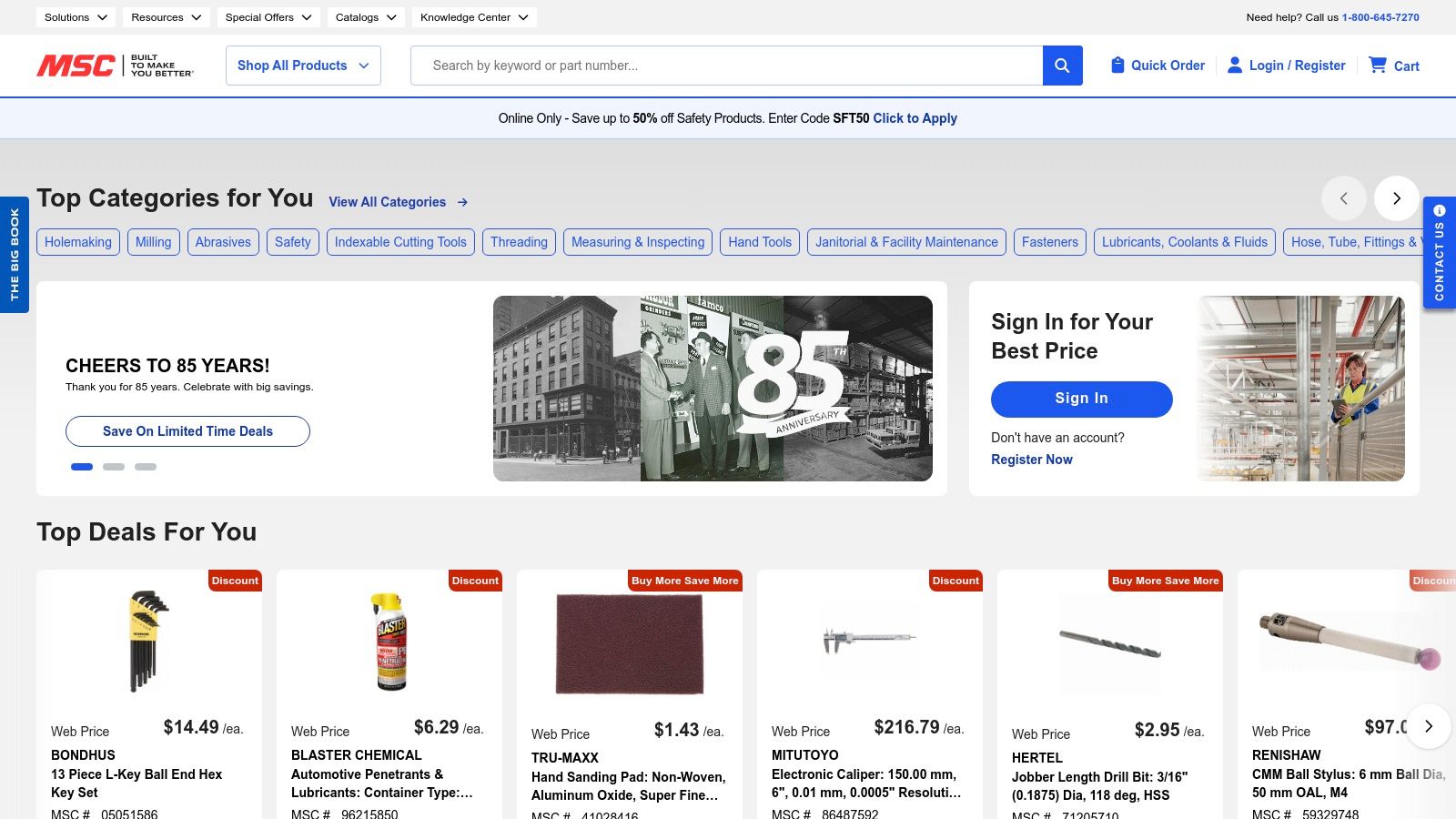
MSC Industrial Supply (www.mscdirect.com) is a leading B2B ecommerce example from the industrial supply sector, specializing in metalworking and MRO products. The platform excels by combining a massive, highly specific catalog with a user-centric site experience and deep eProcurement integrations. For manufacturing and facilities management operations, MSC Direct serves as a critical purchasing hub that balances the speed of online ordering with the complex system requirements of enterprise-level procurement.
What sets MSC Direct apart is its dual focus on front-end usability for the individual buyer and back-end integration for the organization. The platform successfully bridges the gap between a quick, efficient purchase and a fully integrated, policy-driven procurement workflow.
Strategic Breakdown
- User Experience for Order Efficiency: The site is engineered for speed and precision. Features like a quick order pad for SKU entry, personalized product recommendations, and "Visual Browse" allow technical buyers to find exact parts quickly. The goal is to minimize time spent searching and reordering, a key pain point in the MRO space where repeat purchases are common.
- eProcurement and Integrations: MSC Direct offers mature eProcurement capabilities, including PunchOut catalogs and EDI/API connections. This allows large organizations to integrate MSC's catalog directly into their own procurement systems like SAP Ariba or Oracle. This functionality centralizes purchasing, enforces contract pricing, and automates the procure-to-pay process.
- Logistics and Fulfillment: A key part of MSC's value proposition is its robust fulfillment network. The company offers next-day shipping upgrades on qualifying orders in the U.S., which is essential for businesses that need to minimize downtime by getting replacement parts or supplies quickly.
Actionable Takeaways
- Solve for Reordering First: MSC Direct understands that many B2B purchases are repeat buys. By building features like quick order pads and easily accessible order histories, they reduce friction for their most common user journeys. Analyze your customer data to identify repeat purchase patterns and build specific features that make reordering as fast as possible.
- Invest in Technical SEO for a Niche Catalog: With millions of SKUs, discoverability is paramount. MSC's success hinges on buyers finding highly specific, technical products via search. This requires a deep investment in technical SEO, including detailed product attributes, structured data, and targeted content, principles detailed in ecommerce SEO best practices.
- Offer Self-Service and Integrated Solutions: MSC effectively serves both small businesses that need a simple web store and large enterprises that require full procurement system integration. By offering both a standard ecommerce experience and advanced PunchOut/EDI options, they capture a wider market. This tiered approach allows you to scale with your customers as their operational needs become more complex.
4. Uline
Uline (www.uline.com) serves as a masterclass in high-velocity B2B ecommerce, built on operational excellence and a straightforward user experience. The platform specializes in shipping, industrial, and packaging materials, catering to businesses that require frequent, reliable replenishment of essential supplies. Its core value proposition is simple: a massive in-stock inventory combined with an aggressive same-day shipping promise, making it an indispensable partner for businesses managing lean inventories.
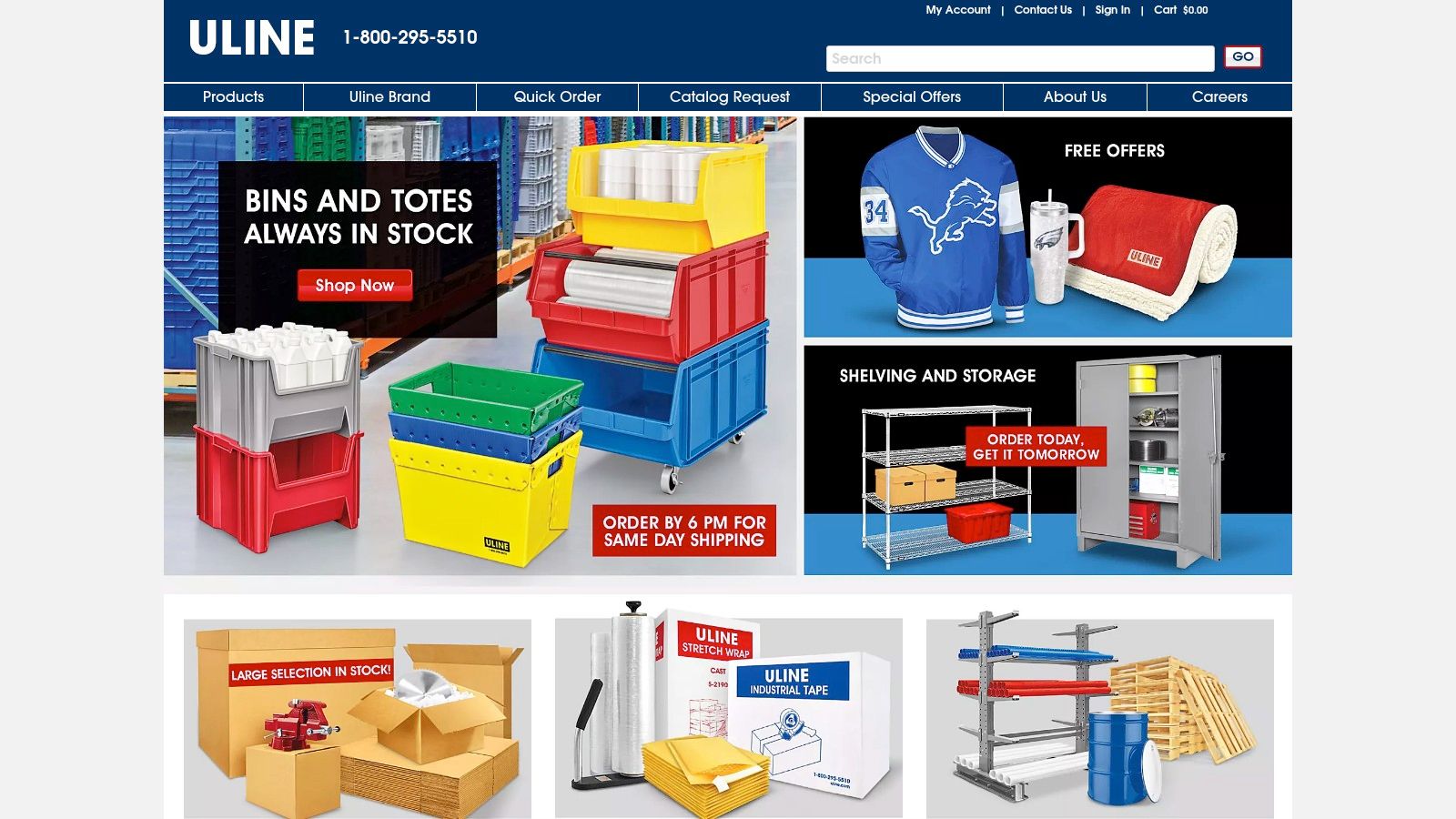
What makes Uline a powerful B2B ecommerce example is its unwavering focus on reducing friction in the reordering process. The site is designed for speed and clarity, prioritizing function over form to help procurement managers get what they need and get back to work. This no-nonsense approach has cultivated a loyal customer base that values reliability above all else.
Strategic Breakdown
- Fulfillment-Centric Model: Uline’s competitive edge is its distribution network. With strategically located warehouses across North America, the company guarantees same-day shipping on orders placed late in the day. This operational strength directly addresses a critical B2B pain point: the high cost of operational downtime due to missing supplies. The website prominently displays this promise, turning a logistical capability into a primary marketing message.
- Transparent Pricing & Ordering: The platform features transparent, quantity-break pricing directly on each product page, eliminating the need for quotes on standard items. The "Quick Order" and simple reordering functions are optimized for repeat purchasers who already know their SKUs. This design acknowledges that many B2B buyers are not browsing but executing routine, planned purchases.
- Utilitarian User Experience: The user interface is intentionally simple, almost utilitarian, which accelerates navigation for repeat buyers. It is supported by 24/7 customer service from real people, a key differentiator that builds trust. While it lacks the deep punch-out integrations of larger industrial suppliers, its focus on direct, fast service appeals to SMBs without formal e-procurement systems.
Actionable Takeaways
- Turn Operational Strengths into a Core UX Feature: Uline’s most prominent feature is its shipping speed. They don’t just offer it; they build the entire brand promise and user experience around it. Identify your single greatest operational advantage—speed, availability, or expertise—and make it the most visible element of your B2B ecommerce site.
- Optimize for the Re-order, Not Just the First Order: B2B success is built on repeat business. Uline’s interface is designed for efficiency, with features like "Quick Order" and easily accessible order history. Prioritize making it exceptionally easy for existing customers to buy again. This focus on customer retention is a key factor explored in detailed guides on how to improve website conversion rate.
- Make Pricing Transparent and Simple: For high-volume, commoditized products, complex quoting systems create unnecessary friction. Uline’s clear, tiered pricing structure empowers buyers to make immediate decisions. If your product catalog allows for it, present straightforward bulk pricing to accelerate the sales cycle and build trust through transparency.
5. Fastenal
Fastenal (fastenal.com) represents a powerful hybrid model in B2B ecommerce, merging a massive digital catalog with a deep physical footprint. As a distributor of industrial and construction supplies, its website functions as a procurement hub that supports complex business needs like custom pricing, approval workflows, and branch-level inventory visibility. This approach is particularly effective for companies with field teams or multi-location operations that require both centralized purchasing control and localized, rapid fulfillment.
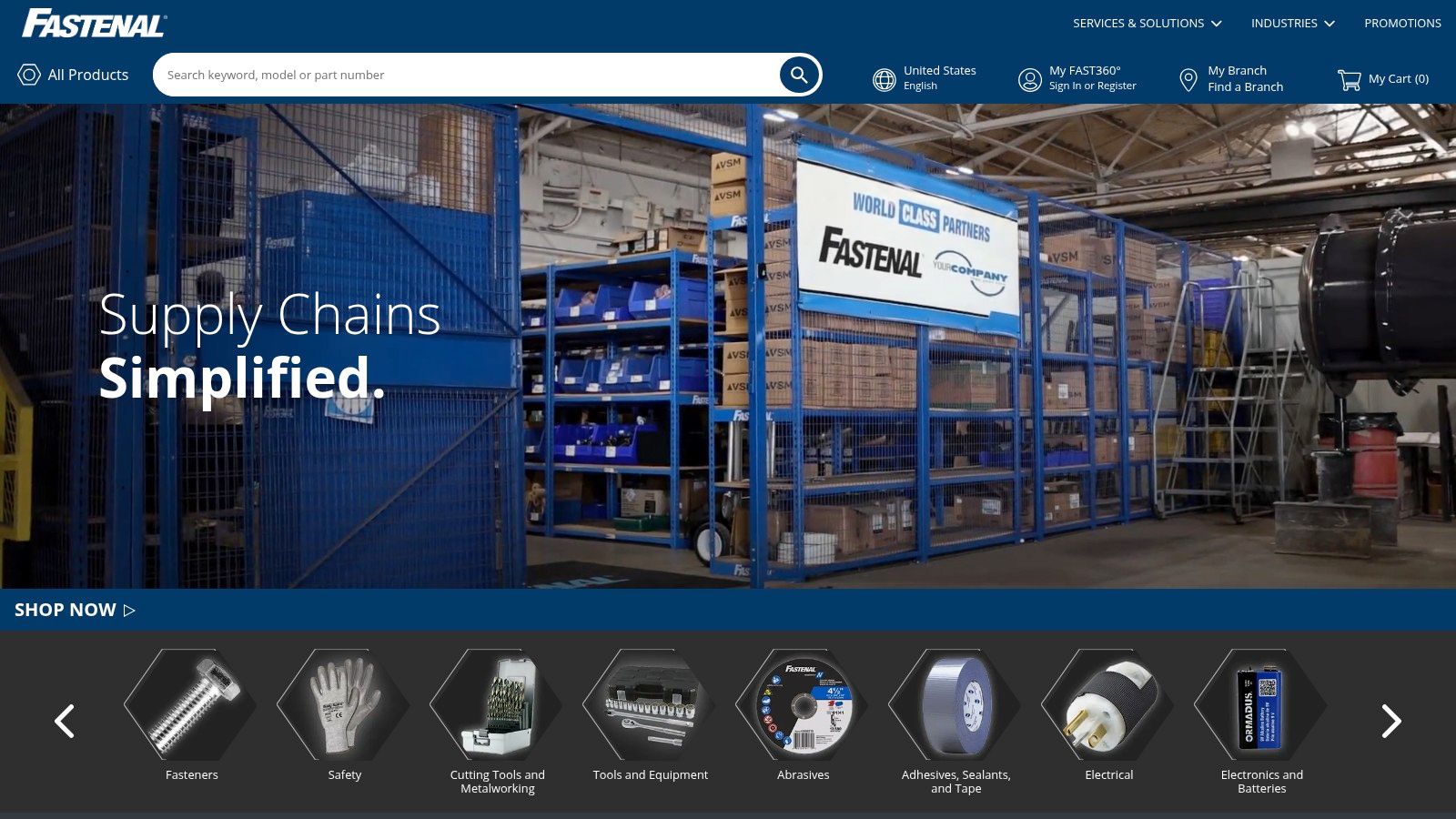
What makes Fastenal a compelling B2B ecommerce example is its mastery of "phygital" (physical plus digital) integration. The platform isn't just a place to order products; it's a control center for a company’s entire supply chain, connecting online ordering with local branches, on-site inventory management, and industrial vending solutions. This blend directly addresses core B2B challenges like downtime, stockouts, and inefficient procurement.
Strategic Breakdown
- Omnichannel Fulfillment: Fastenal’s website provides real-time stock visibility at the local branch level, allowing buyers to opt for local pickup or direct delivery. This is a critical advantage for urgent needs on job sites or in manufacturing facilities, turning their 3,000+ branches into an immediate fulfillment network that pure-play ecommerce sites cannot match.
- Managed Inventory Solutions: Beyond standard ordering, Fastenal offers technology-driven inventory solutions like FAST Vend (industrial vending machines) and FAST Bin (automated inventory bins). The website serves as the portal for managing these on-site programs, viewing usage data, and controlling access. This transforms their offering from a simple product supplier to a strategic inventory management partner.
- Governance & Account Control: The platform is built for serious spend management. Administrators can set up detailed user permissions, create approval workflows to prevent rogue spending, and establish order templates for frequently purchased items. Features like eQuotes and contract pricing ensure that negotiated rates are applied automatically, simplifying budget adherence for large teams.
Actionable Takeaways
- Bridge the Online-Offline Gap: Fastenal proves that a physical presence can be a massive digital advantage. If your business has physical locations, integrate them directly into your ecommerce experience. Offer features like real-time local inventory checks and in-store pickup to provide a level of service that online-only competitors can't replicate.
- Move from Selling Products to Solving Problems: Instead of just selling industrial supplies, Fastenal sells uptime, efficiency, and inventory control through its vending and on-site programs. Analyze your customers' core operational challenges and consider how your B2B platform can offer services or solutions that address those pains. This elevates your value proposition beyond product and price.
- Use Content to Drive High-Intent Leads: Fastenal’s audience is looking for specific, technical solutions. Their website could be a powerful engine for capturing this demand with targeted content. A similar business should invest in building out resource centers or detailed product guides, as explored in various demand generation strategies, to attract professional buyers at the research stage.
6. Ferguson
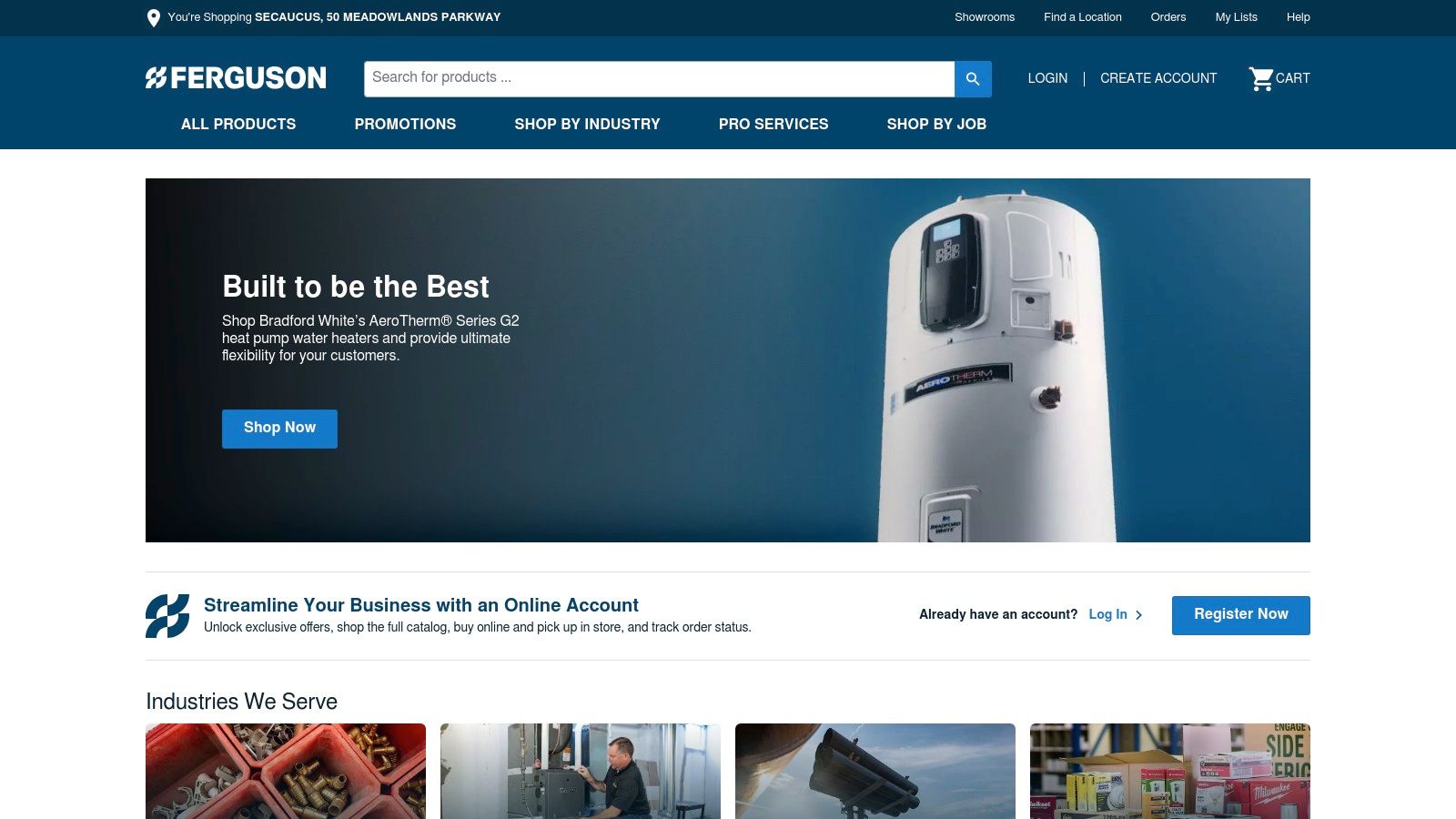
Ferguson (ferguson.com) is a leading U.S. distributor in the plumbing, HVAC, and waterworks industries, and its ecommerce platform is a masterclass in serving the specific needs of trade professionals. The site and its companion mobile app are built for speed and field-based workflows, moving beyond a simple product catalog to become an essential tool for contractors managing projects on the go. It effectively merges online convenience with the physical reality of local inventory and job site demands.
What makes Ferguson an excellent B2B ecommerce example is its focus on the "omnichannel" experience for trade professionals. The platform acknowledges that its customers work in the field, not just behind a desk, and provides tools that bridge the gap between digital ordering and physical product acquisition. This is a platform designed for replenishment, on-site problem-solving, and time-sensitive procurement.
Strategic Breakdown
- Mobile-First Field Tools: Ferguson's mobile app is a core part of its strategy. Features like barcode scanning allow contractors to instantly reorder supplies directly from their truck or warehouse stock. This turns a tedious manual inventory process into a quick, error-free digital transaction, saving immense time for field crews.
- Localized Inventory and Fulfillment: A critical feature for trade professionals is knowing if a part is available right now. The platform provides real-time local stock visibility, allowing users to confirm product availability at their nearest branch before driving there. The "Buy Online, Pro Pick-Up" option further accelerates the process, ensuring orders are ready for collection with minimal downtime.
- Customer Loyalty and Retention: The PRO Plus loyalty program is designed to incentivize repeat business. By offering tiered rewards and benefits for online purchases, Ferguson encourages platform adoption and creates a strong incentive for contractors to consolidate their spending. This program transforms transactional purchases into a long-term partnership.
Actionable Takeaways
- Build for Your Customer's Real-World Workflow: Ferguson wins by understanding that a plumber or HVAC technician's "office" is often a truck or a job site. By building a mobile app with field-centric tools like barcode scanning, they solve a real, tangible problem. Analyze your customers' daily routines and develop features that directly address their operational pain points, even those that occur offline.
- Connect Digital Convenience with Physical Assets: If your business has physical locations, use them as a competitive advantage. Ferguson’s real-time local stock checks and "Pro Pick-Up" are powerful differentiators against online-only competitors. Integrating your brick-and-mortar inventory with your ecommerce site builds trust and provides the immediacy that many B2B buyers require.
- Implement a Loyalty Program That Rewards B2B Behaviors: A well-structured loyalty program can be a powerful retention tool. Ferguson’s PRO Plus program rewards frequent, high-volume purchasing, a common B2B behavior. Consider creating a tiered rewards system that offers meaningful benefits—such as exclusive discounts or priority support—to your most valuable business accounts.
7. CDW
CDW (www.cdw.com) operates as a leading IT solutions reseller, demonstrating how a B2B ecommerce platform can serve as both a product catalog and a deeply integrated procurement system. It provides a massive selection of hardware, software, and IT services, catering to everyone from small businesses to large enterprises. The platform is designed to standardize technology purchasing, manage approvals, and maintain control over company assets.
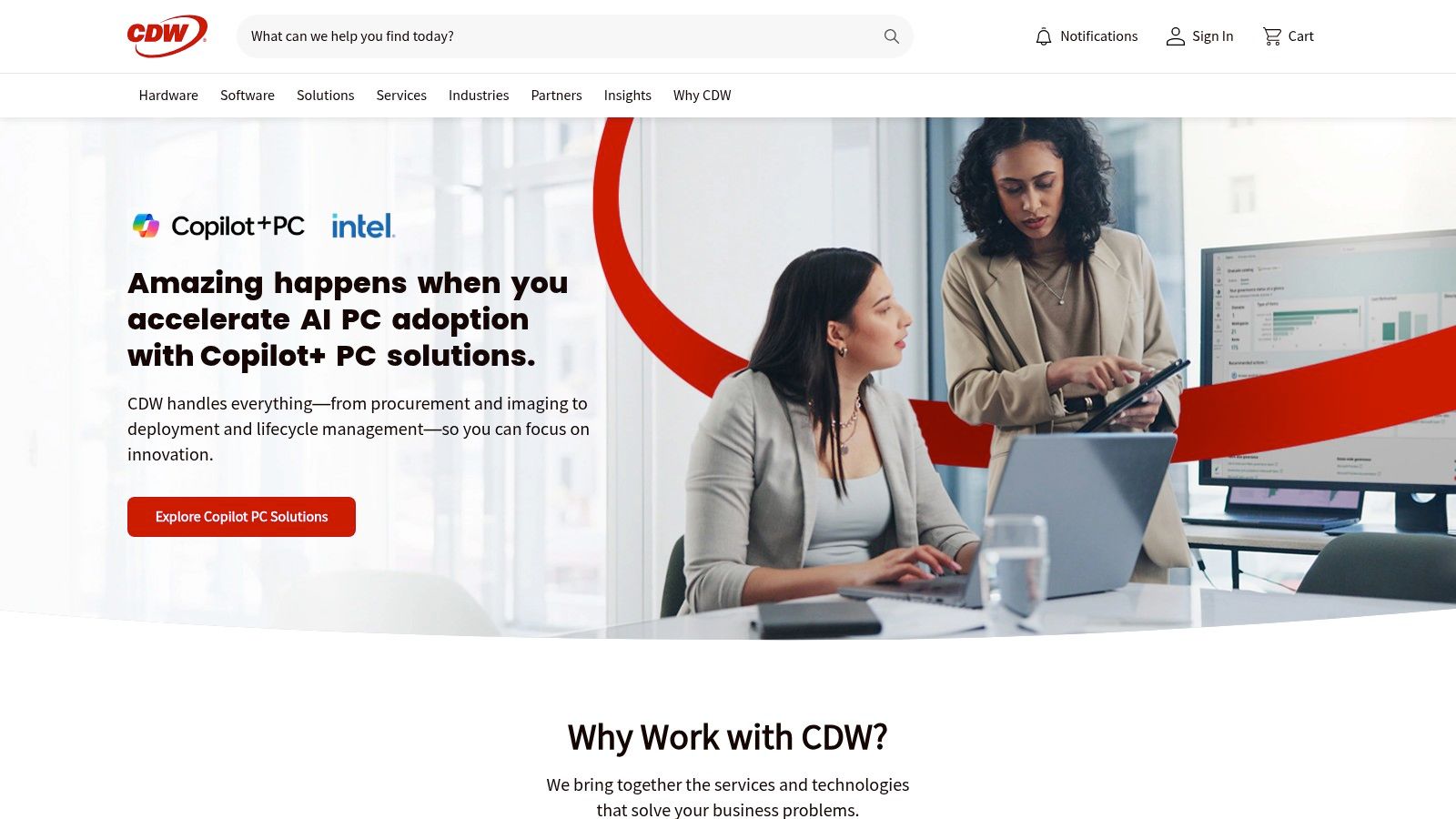
What makes CDW a powerful B2B ecommerce example is its focus on procurement-first functionality. While it offers a public-facing storefront, its core value lies in its backend systems that support complex organizational buying processes. The platform bridges the gap between a simple online store and a strategic procurement tool that gives IT and finance departments strict control and visibility.
Strategic Breakdown
- eProcurement Integrations: CDW's strength is its mature support for eProcurement systems. It offers PunchOut, Roundtrip, and EDI/API integrations with major ERPs and purchasing platforms like SAP Ariba and Coupa. This allows large organizations to access CDW's catalog directly from within their existing procurement software, automating the entire purchase-to-pay lifecycle.
- Customized Account Management: Business accounts receive dedicated account managers and specialist support for complex IT needs. A key feature is the ability to create custom catalogs with pre-negotiated pricing and approved product lists. This catalog governance ensures employees only purchase standardized, compliant technology, simplifying IT management and reducing rogue spending.
- Hybrid Sales Model: CDW successfully blends self-service ecommerce with high-touch sales support. Customers can independently research and purchase standard items online, but they can also easily request quotes or engage with their account team for complex solutions. This hybrid approach accommodates both simple re-orders and strategic, project-based procurement.
Actionable Takeaways
- Integrate Where Your Customers Work: CDW proves that the best B2B experience often meets customers inside their existing workflows. By offering robust PunchOut and API integrations, they embed their buying process into their clients' native procurement systems. If you serve large organizations, investing in integrations with common ERP software can become a significant competitive advantage.
- Use Gated Content to Drive Sales Engagement: While much of CDW's site is public, accessing negotiated pricing and custom catalogs requires an account and often a conversation with a sales representative. This model allows you to use your public site for discovery while gating high-value features to qualify leads and initiate direct sales conversations for more complex needs.
- Combine Self-Service with Expert Support: Not every B2B purchase is straightforward. CDW’s model shows the value of pairing a self-service ecommerce platform with accessible human expertise. Ensure your customers can complete simple transactions on their own but also provide clear pathways to connect with account managers or technical specialists when they need guidance.
Key Strategic Takeaways from Leading B2B Platforms
Analyzing these diverse B2B ecommerce examples reveals a clear pattern: success is not defined by having the most features, but by meticulously solving the right problems for a specific customer segment. The leaders in this space do not simply list products online; they build digital ecosystems that become indispensable parts of their clients' daily operations.
From Grainger’s integration with physical inventory workflows to CDW’s deep eProcurement capabilities, each standout platform is built around a data-informed value proposition. They have moved beyond the simple transaction to become a strategic partner. This shift is the most critical takeaway. The ultimate goal is to make your ecommerce platform the most efficient, reliable, and intelligent path for customers to do business with you.
Synthesizing the Core Strategies
As you plan your own B2B digital commerce strategy, these examples offer a clear blueprint. Their success is not accidental but the result of intentional, strategic decisions. Three core pillars stand out:
- Operational Integration: The best platforms don’t just exist on a screen; they connect directly to a customer's real-world processes. This includes everything from punchout catalogs that link to a buyer’s ERP system to offering inventory management solutions that reduce their carrying costs. The strategic question to ask is: "How can our website reduce our customers' operational friction?"
- Data-Driven Personalization: B2B buyers expect a consumer-grade experience with industrial-strength functionality. This means using purchase history and account data to deliver personalized product recommendations, contract-specific pricing, and simplified reordering. MSC Direct’s ability to surface relevant MRO supplies based on past orders is a perfect illustration of this principle.
- Frictionless Procurement: The path from identifying a need to placing an order must be as short and simple as possible. Uline’s obsession with fulfillment speed and Fastenal’s on-site solutions both attack this problem from different angles. Whether through powerful on-site search, detailed technical specifications, or flexible quoting tools, removing barriers in the buying journey builds loyalty and increases order frequency.
A truly effective strategy is not a one-time build, but a continuous cycle of analysis, iteration, and optimization based on user data and business outcomes. This approach turns your ecommerce platform from a simple sales channel into a lasting competitive advantage, ensuring you are not just a vendor, but a vital partner in your customers' success.