
Choosing an ecommerce platform is one of the most consequential decisions a business can make. It dictates not only how you sell but, more importantly, how you are found. The right platform acts as a powerful foundation for organic growth, enabling the technical precision, content strategy, and seamless user experience that search engines reward. Conversely, the wrong choice can create persistent technical debt, limit content opportunities, and become an ongoing obstacle to visibility and revenue.
This guide moves beyond surface-level marketing claims to provide a data-driven analysis of what truly makes the best ecommerce platform for SEO. We cut through the noise to evaluate the top contenders—including Shopify, BigCommerce, WooCommerce, and more—based on critical performance criteria:
- Technical SEO Control: How much access do you have to robots.txt, sitemaps, and URL structures?
- Content Capabilities: Does the platform support robust blogging and content marketing?
- Performance & Core Web Vitals: Is the platform built for speed and a positive user experience?
- Scalability & App Ecosystems: Can the platform grow with you without creating SEO roadblocks?
This isn't just a feature list; it's a strategic framework to help you select a platform that aligns with your business model and long-term growth ambitions. Each analysis includes an honest assessment of strengths and limitations, screenshots, and direct links to help you make an informed decision. Our goal is to ensure your investment today pays dividends in organic traffic for years to come.
1. Shopify
Shopify is a globally recognized, hosted ecommerce platform that excels in providing a fast, secure, and user-friendly foundation for online stores. Its biggest strength lies in combining high-performance infrastructure with a straightforward interface, making it an excellent candidate for the best ecommerce platform for SEO, especially for merchants who prioritize speed and stability without requiring deep technical knowledge. Shopify handles the server-side complexities, including a built-in Content Delivery Network (CDN), ensuring consistently quick load times—a critical factor for both user experience and search rankings.

The platform offers clear, native controls over essential on-page SEO elements like title tags, meta descriptions, and URLs. It also generates a sitemap.xml file automatically and allows for theme-level edits via its Liquid templating language for more advanced customizations, including rel="canonical" tag adjustments. For those choosing this platform, learning how to improve SEO on your Shopify store is paramount to organic success.
Key Strengths & Limitations
Pros:
- Performance: World-class hosting and an integrated CDN deliver exceptional site speed and uptime, directly impacting SEO performance and conversion rates.
- App Ecosystem: A massive marketplace provides powerful apps for advanced SEO tasks, such as schema markup generation, image optimization, and technical audits.
- User-Friendly SEO: Core SEO settings are accessible and easy to manage, making the platform approachable for beginners and efficient for experts.
Cons:
- URL Structure: The platform imposes a rigid URL structure (e.g.,
/collections/and/products/), which cannot be altered, limiting full customization. - Robots.txt Access: Direct editing of the
robots.txtfile is restricted, which can be a limitation for complex technical SEO strategies.
Ultimately, Shopify's focus on performance and its extensive app support make it a top contender, particularly for small-to-medium businesses seeking a scalable and reliable ecommerce solution. As one of the top ecommerce platforms for small businesses, its framework is built for growth.
Website: https://www.shopify.com
2. BigCommerce
BigCommerce is an open-SaaS ecommerce platform recognized for its powerful native SEO features and enterprise-grade capabilities. It positions itself as an ideal choice for merchants who need advanced functionality out-of-the-box without relying heavily on third-party apps. Its key advantage is offering a robust, feature-rich environment that balances ease of use with deep customization potential, making it a strong contender for the best ecommerce platform for SEO, particularly for businesses poised for growth. The platform’s architecture is built to handle complexity, from multi-storefront management to headless commerce implementations.
From a technical SEO perspective, BigCommerce provides granular control over URLs, a significant advantage over competitors. Users can fully customize product and category page URLs, removing prefixes like /products/ for cleaner, more keyword-rich structures. The platform also offers strong native features, including an editable robots.txt file, automatic sitemap generation, and straightforward management of title tags and meta descriptions. Its focus on headless commerce via its Catalyst framework, built on Next.js, also provides a pathway for achieving exceptional site speed and Core Web Vitals scores.
Key Strengths & Limitations
Pros:
- URL Customization: Complete control over URL structures allows for optimal on-page SEO without platform-imposed limitations.
- Strong Native SEO: Many essential SEO features, such as 301 redirects and an editable
robots.txt, are built-in, reducing reliance on paid apps. - Headless Capabilities: Its open-SaaS approach and robust APIs make it a leading choice for high-performance headless builds, directly impacting speed and rankings.
Cons:
- Revenue-Based Tiers: Plans have annual revenue caps, which can force businesses into more expensive tiers as they scale.
- Theme Customization Complexity: While powerful, customizing themes can have a steeper learning curve compared to more simplified platforms.
Ultimately, BigCommerce is a superb option for mid-market and enterprise-level businesses that require advanced SEO controls and scalability. Its native feature set supports sophisticated ecommerce content marketing strategies, empowering brands to build a strong organic presence without immediate technical roadblocks.
Website: https://www.bigcommerce.com
3. WooCommerce
WooCommerce is an open-source ecommerce plugin built for WordPress, offering merchants complete ownership and unparalleled control over their store's technical stack. Its core strength is its deep integration with the WordPress ecosystem, which provides maximum flexibility for SEO. This makes it a formidable candidate for the best ecommerce platform for SEO, particularly for businesses that want to fine-tune every aspect of their site's on-page and technical optimization without platform-imposed restrictions.
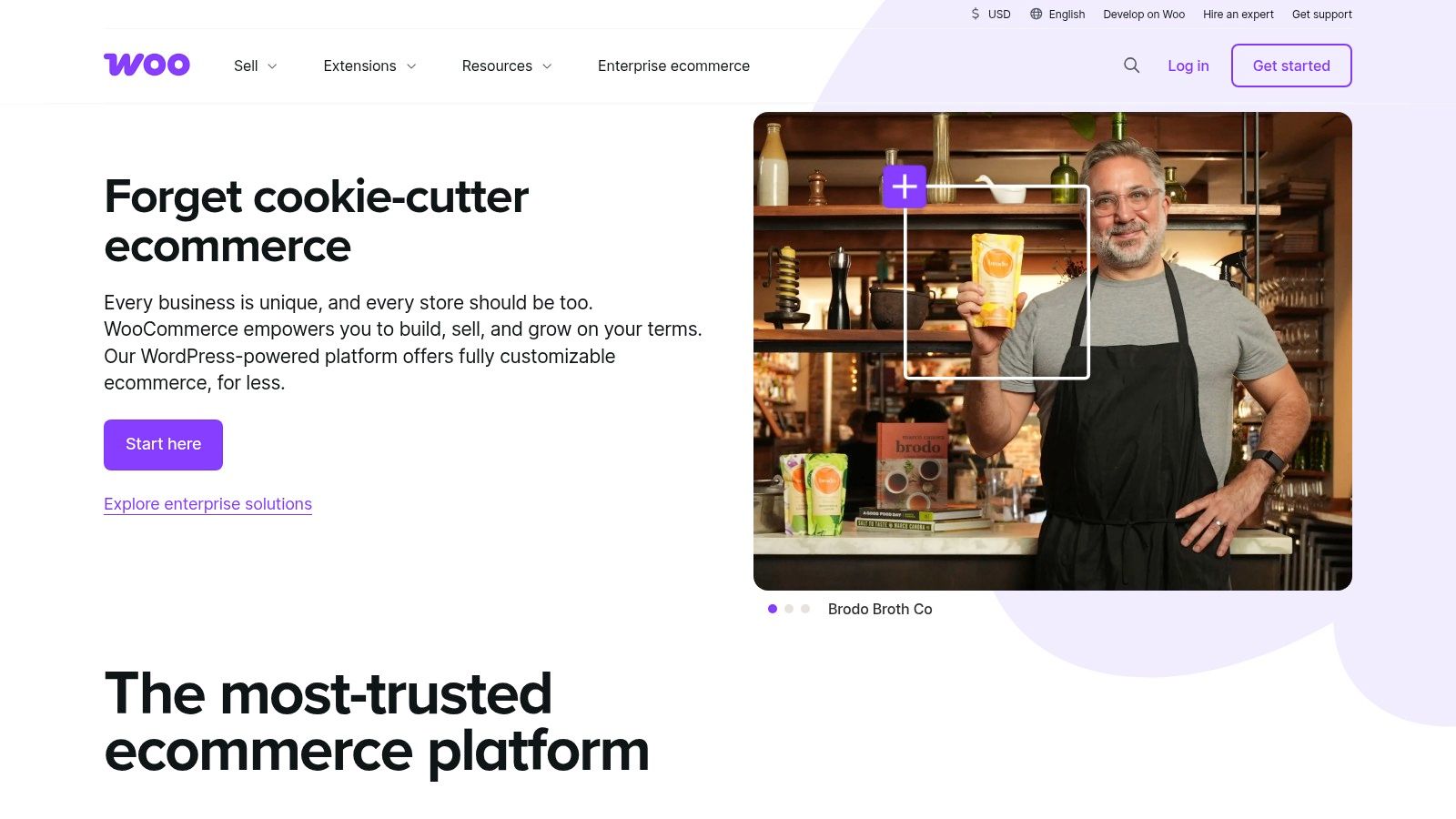
Unlike hosted solutions, WooCommerce gives users full control over their hosting environment, URLs, metadata, and schema markup, often managed through powerful plugins like Yoast SEO or Rank Math. This freedom allows for the implementation of advanced strategies and aligns perfectly with many fundamental ecommerce SEO best practices. Because the core plugin is free, the initial cost is low, though total cost of ownership increases with the need for premium extensions, hosting, and security management.
Key Strengths & Limitations
Pros:
- Maximum SEO Control: Users have full authority over URL structures,
robots.txt, sitemaps, and all on-page elements, offering limitless customization. - Vast Plugin Ecosystem: Access to the extensive WordPress and WooCommerce plugin libraries enables advanced SEO features, from sophisticated schema markup to automated internal linking.
- Full Ownership: Being self-hosted means there are no platform restrictions on content, design, or functionality, giving merchants complete freedom.
Cons:
- Technical Responsibility: The merchant is responsible for sourcing hosting, managing security, and performing software updates, which requires technical expertise or a dedicated resource.
- Performance Management: Site speed and performance depend entirely on the chosen hosting plan and optimization efforts, which can be a significant challenge for beginners.
Ultimately, WooCommerce's open-source nature provides the ultimate SEO playground for those willing to manage the technical overhead. It is ideal for merchants with specific SEO requirements or those who prioritize granular control above all else.
Website: https://woocommerce.com
4. Wix eCommerce
Wix eCommerce has evolved into a formidable hosted platform, offering a highly accessible entry point for merchants prioritizing ease of use alongside solid SEO fundamentals. Its primary advantage is the guided and integrated nature of its tools, making it a strong candidate for the best ecommerce platform for SEO for those without a technical background. Wix provides a built-in SEO setup plan (the "SEO Wiz") that walks users through foundational optimizations, from title tags to structured data, abstracting much of the complexity away. This focus on guided setup, combined with managed hosting and security, delivers a reliable and performant foundation right out of the box.
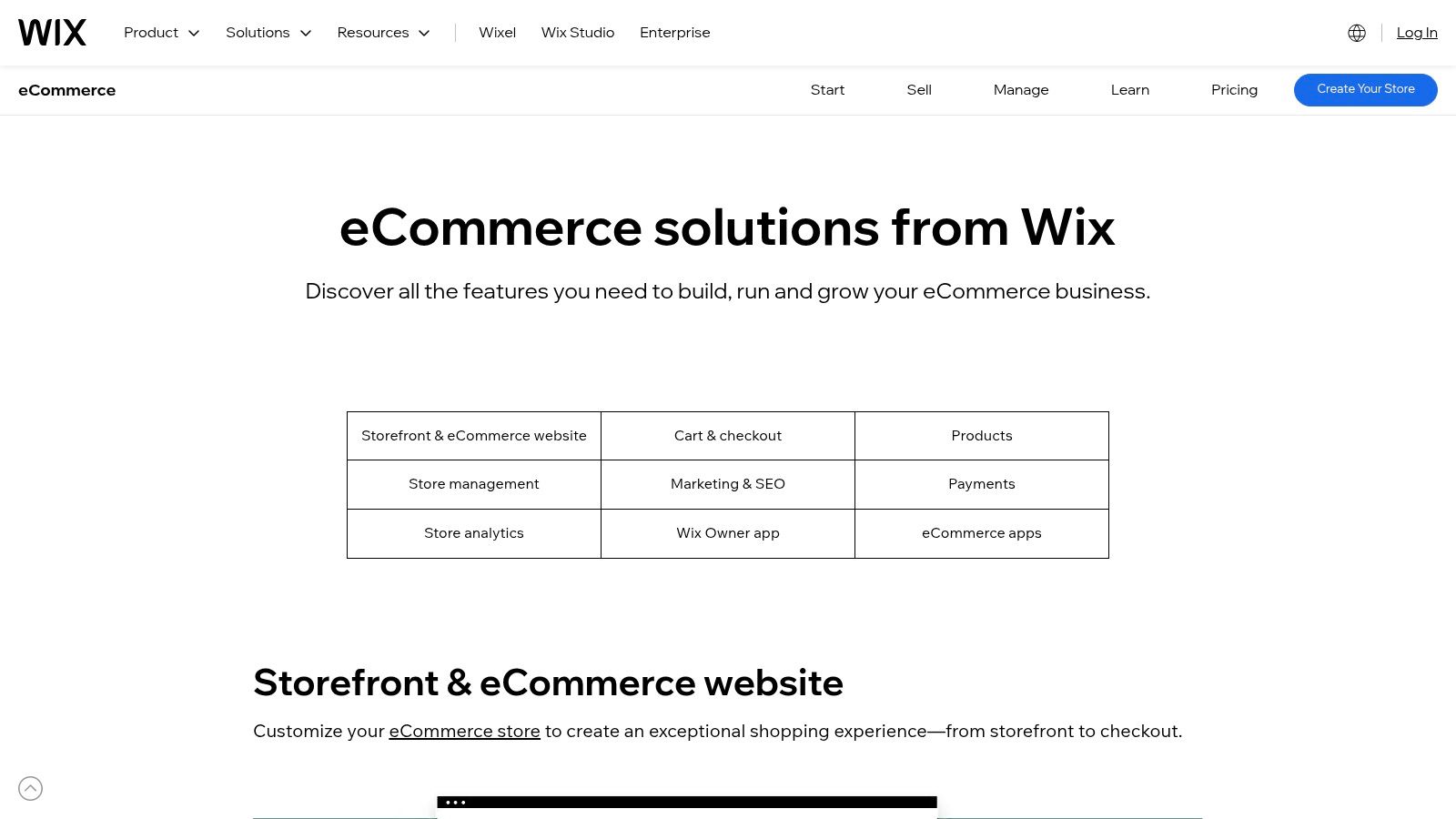
The platform grants users significant control over crucial SEO settings, including customizable URLs, meta tags, structured data markup, and 301 redirect management. It also offers advanced features like instant indexing via an integration with Google's Indexing API, which helps get new and updated pages crawled faster. For expanded functionality, the Wix App Market includes SEO-specific apps like Site Booster and SEO Booster, which can help with tasks ranging from local listings to keyword analysis.
Key Strengths & Limitations
Pros:
- Guided SEO Tools: The built-in SEO setup plan simplifies core optimizations, making it ideal for beginners and non-technical users who need clear direction.
- Integrated Marketing Suite: Wix combines SEO features with a suite of marketing tools for email, social media, and ads, creating a cohesive ecosystem.
- App Market Functionality: The App Market allows for the addition of specialized SEO tools to enhance capabilities beyond the native feature set.
Cons:
- Limited Advanced Flexibility: Compared to open-source solutions, advanced technical SEO customizations are more constrained by the platform's hosted framework.
- Builder-Constrained Customization: While flexible, the builder model can impose certain limitations that may affect highly specific or enterprise-level SEO strategies.
Ultimately, Wix is an excellent choice for small to medium-sized businesses that require a powerful, all-in-one solution with strong, user-friendly SEO controls and integrated marketing capabilities.
Website: https://www.wix.com/ecommerce/features
5. Squarespace
Squarespace is a design-forward, hosted ecommerce platform known for its visually stunning templates and integrated marketing tools. It stands out by offering robust technical SEO defaults and a dedicated SEO panel right out of the box, making it an excellent choice for content-plus-commerce websites. Merchants who prioritize brand aesthetics and want simple, unified management of their store, content, and SEO will find its all-in-one approach highly efficient.
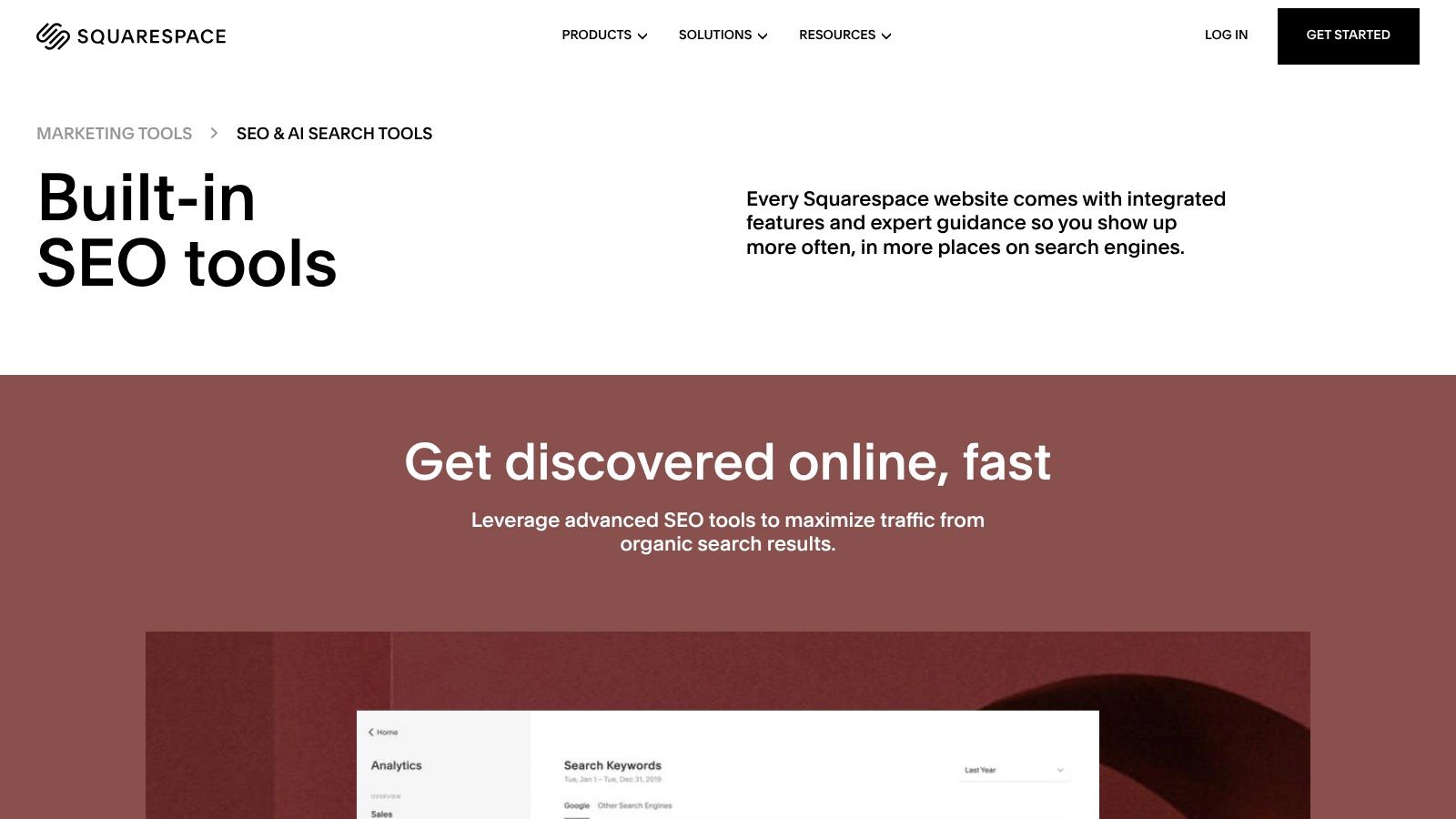
The platform automatically handles critical technical elements like sitemaps, robots.txt files, structured data, and clean URL generation. Its built-in SEO checklist, Google Search Console integration, and new AI-driven metadata suggestions empower users to optimize their sites without deep technical expertise. This unified admin for store, content, and SEO reduces the need for third-party plugins, simplifying workflows and minimizing potential conflicts, making it a strong contender for the best ecommerce platform for SEO for certain business models.
Key Strengths & Limitations
Pros:
- Strong SEO Defaults: Squarespace manages most technical SEO aspects automatically, requiring minimal configuration from the user.
- Unified Admin: A simple, integrated dashboard for content, commerce, and SEO reduces plugin sprawl and operational complexity.
- Content-Led Commerce: The platform excels for businesses where design, blogging, and editorial content are central to the sales strategy.
Cons:
- Limited Extensions: It offers fewer advanced commerce extensions compared to more specialized platforms like Shopify or WooCommerce.
- Scalability Constraints: The platform is less suitable for businesses with highly complex product catalogs or those requiring custom backend integrations.
Ultimately, Squarespace provides a streamlined and powerful solution for businesses where brand presentation and content marketing are as important as the products themselves. Its focus on built-in SEO functionality makes it a formidable option for entrepreneurs and small businesses seeking simplicity and control.
Website: https://www.squarespace.com/marketing/seo
6. Webflow Ecommerce
Webflow Ecommerce is a visually-driven, CMS-centric platform that empowers designers and content-focused teams with granular SEO control without relying on plugins. Its primary strength is the seamless integration of a powerful Content Management System (CMS) with ecommerce functionality. This combination makes it an exceptional candidate for the best ecommerce platform for SEO, particularly for businesses executing sophisticated content marketing, programmatic SEO, or content hub strategies alongside their product sales.
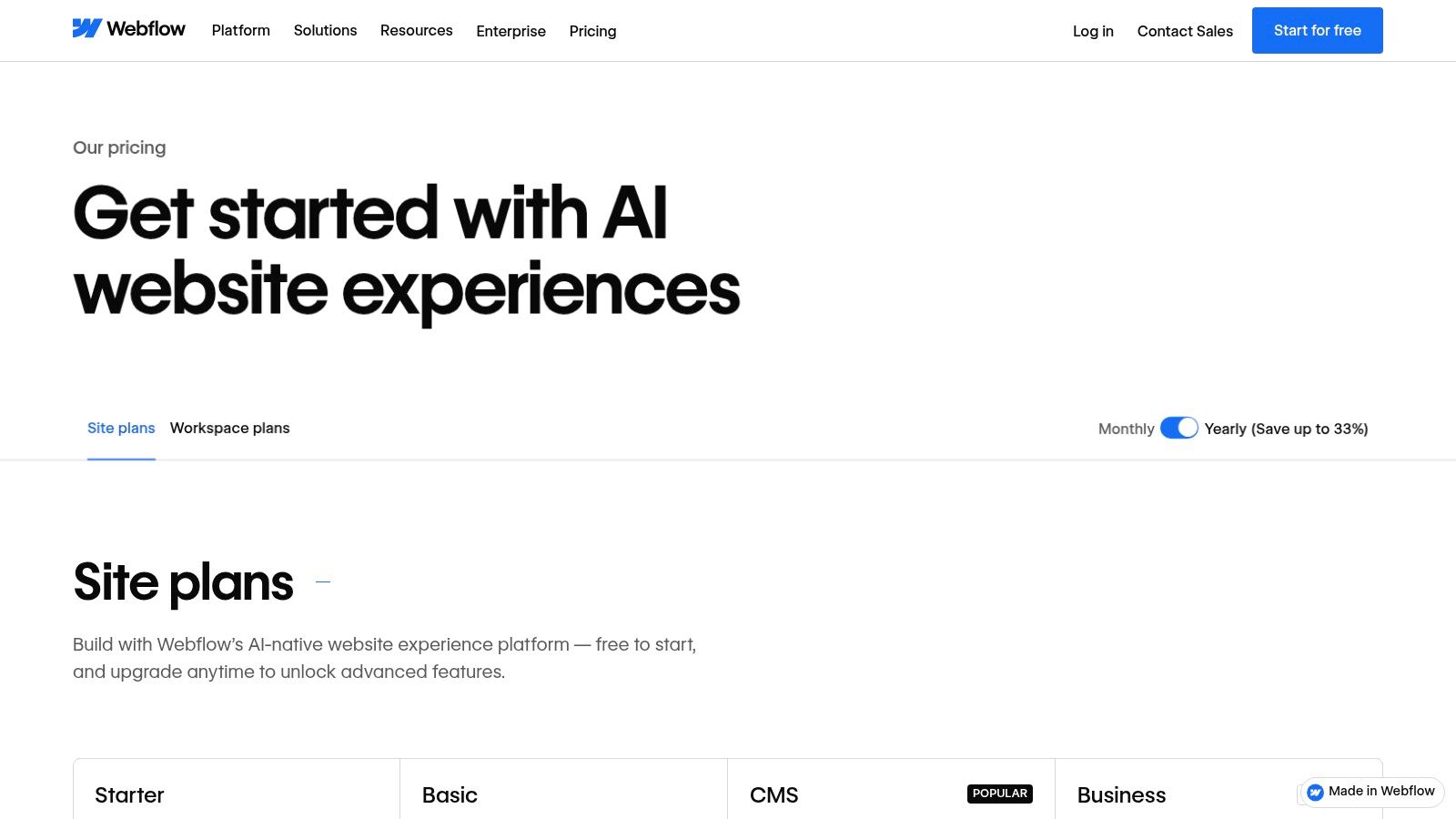
The platform provides direct, native control over meta tags, indexing rules, 301 redirects, and automatically generates a sitemap. It also features advanced Schema capabilities, including AI assistance, allowing for rich results in SERPs. Webflow’s design-first approach gives merchants total freedom over their site structure and visuals, which is a key component of effective ecommerce website design best practices that influence user engagement and conversions.
Key Strengths & Limitations
Pros:
- Excellent Technical SEO Control: Natively manage critical SEO settings like canonical tags, robots.txt rules, and redirects without needing third-party apps.
- Flexible CMS: The integrated CMS is ideal for building dynamic, content-heavy ecommerce sites and enables advanced programmatic SEO workflows.
- Design Freedom: Offers unparalleled visual control, allowing for unique, brand-aligned user experiences that can improve SEO metrics like time-on-page.
Cons:
- SKU and Feature Limits: Product and sales limits are tied to specific pricing plans, which may be restrictive for larger inventories or high-volume stores.
- Tier-Based Cost: Accessing advanced ecommerce features and lower transaction fees (from 2% to 0%) requires subscribing to more expensive tiers.
Ultimately, Webflow Ecommerce is an outstanding choice for brands where content and design are central to the marketing strategy, offering a level of SEO and creative control that few other hosted platforms can match.
Website: https://webflow.com/pricing
7. Adobe Commerce (Magento)
Adobe Commerce, widely known by its former name Magento, is an enterprise-grade, composable commerce platform. It stands out by offering unparalleled control over the technical environment, making it a powerful contender for the best ecommerce platform for SEO for large-scale operations and B2B businesses. Its open-source foundation provides developers with the deep access needed to customize every aspect of the site, from server configurations to intricate URL structures, which is essential for complex SEO strategies.

The platform's API-first architecture, utilizing GraphQL and REST, allows for building highly optimized, headless storefronts designed for high Core Web Vitals and SEO scores. Features like AI-powered Live Search provide intelligent faceting and merchandising rules, enhancing user experience and internal linking opportunities. This level of customization is crucial for businesses looking to implement advanced tactics as part of a sophisticated, data-driven SEO strategy.
Key Strengths & Limitations
Pros:
- Complete SEO Control: Offers full control over URL structures, metadata,
robots.txt, and sitemaps, allowing for highly specific technical SEO implementation. - Scalability: Built to handle massive product catalogs and high traffic volumes without compromising performance, a key factor for enterprise-level SEO.
- Advanced B2B Features: Native B2B capabilities, including custom pricing and catalogs, can be optimized for specific B2B search intent and keywords.
Cons:
- High Technical Requirement: Requires significant development resources and technical expertise to build, maintain, and optimize, increasing the total cost of ownership.
- Complex Deployment: Pricing and deployment are custom-quoted and typically involve a lengthy sales and implementation cycle with a development partner.
Ultimately, Adobe Commerce is the definitive choice for enterprises that require granular control and have the technical resources to execute a sophisticated, custom-tailored SEO strategy.
Website: https://business.adobe.com/products/magento.html
8. Shift4Shop (formerly 3dcart)
Shift4Shop, formerly known as 3dcart, positions itself as a robust ecommerce platform with a significant emphasis on providing a comprehensive, built-in SEO toolkit. Its main appeal lies in offering an extensive suite of search optimization features out of the box, reducing the reliance on paid third-party apps. For merchants who want powerful technical SEO controls included in their core subscription, Shift4Shop is a compelling candidate for the best ecommerce platform for SEO. The platform natively supports features like AMP for product pages, automated schema.org data, and customizable robots.txt files.

This focus on bundled functionality extends to 301 redirects with automatic 404 detection, sitewide HTTPS, and advanced on-site search capabilities. For US-based merchants utilizing Shift4 as their payment processor, the platform offers a free End-to-End plan, which essentially eliminates monthly platform fees. This makes it an incredibly cost-effective yet feature-rich option for businesses that qualify, allowing them to allocate more budget toward marketing and growth initiatives.
Key Strengths & Limitations
Pros:
- Bundled SEO Features: Many advanced SEO tools like schema, AMP, and
robots.txtcustomization are included natively, minimizing the need for extra costs. - Cost-Effective Plan: The End-to-End plan for qualifying US merchants can significantly lower operational expenses by removing monthly platform fees.
- Technical SEO Control: Provides deeper access to technical SEO settings compared to many hosted competitors, appealing to advanced users.
Cons:
- Smaller Ecosystem: The community and third-party app marketplace are less extensive than those of platforms like Shopify or WooCommerce.
- Integration Limitations: May offer fewer pre-built integrations with niche marketing and operational software, potentially requiring custom development.
Ultimately, Shift4Shop is an excellent choice for businesses that want an all-in-one solution with deep SEO capabilities built directly into the core platform, especially for US merchants who can take advantage of its unique pricing model.
Website: https://www.shift4shop.com
9. Square Online (Block)
Square Online, part of the Block ecosystem, is a fully integrated ecommerce platform designed for merchants who prioritize a unified system for in-person and online sales. Its primary strength lies in its seamless connection with the Square POS, making it an excellent choice for brick-and-mortar businesses expanding online. While not as customizable as developer-focused platforms, it provides a solid and straightforward foundation for SEO, handling many technical aspects automatically. This makes it a contender for the best ecommerce platform for SEO for those seeking simplicity and omnichannel efficiency.

The platform offers fundamental, per-page SEO controls for titles, meta descriptions, and URL slugs, along with automatic sitemap generation and simple Google Search Console verification. For merchants already using Square's payment processing and POS, the ability to manage inventory, sales, and online presence from a single dashboard is a significant operational advantage. The platform offers multiple tiers, including a free plan, with SEO features scaling alongside business growth.
Key Strengths & Limitations
Pros:
- Omnichannel Integration: The tight integration with Square POS creates a powerful, unified system for managing inventory and sales across physical and digital channels.
- Simplicity: Core SEO settings are accessible and easy to implement, making it ideal for business owners without deep technical SEO knowledge.
- Transparent Pricing: Features transparent, flat-rate payment processing fees and clear software tiers (Free, Plus, Premium), simplifying cost management.
Cons:
- Limited Customization: Lacks the advanced SEO customization capabilities found in more developer-oriented platforms, restricting complex strategies.
- Basic Toolset: The built-in SEO tools are effective for fundamentals but may require third-party solutions for more advanced tasks like structured data or in-depth audits.
Ultimately, Square Online is best suited for existing Square users or local businesses that need a simple, effective, and integrated solution for launching an online store without a steep learning curve.
Website: https://squareup.com/us/en/online-store
10. Shopware
Shopware is a modern, API-first ecommerce platform, popular in Europe, that delivers strong out-of-the-box SEO capabilities. It is designed with a composable architecture, offering flexibility for marketers who want powerful, user-friendly SEO features without heavy developer reliance. The platform provides both cloud-based SaaS plans and a free, open-source Community Edition, catering to a wide range of business needs and technical expertise. This flexibility makes it a compelling option for those seeking the best ecommerce platform for SEO with options for scalability.
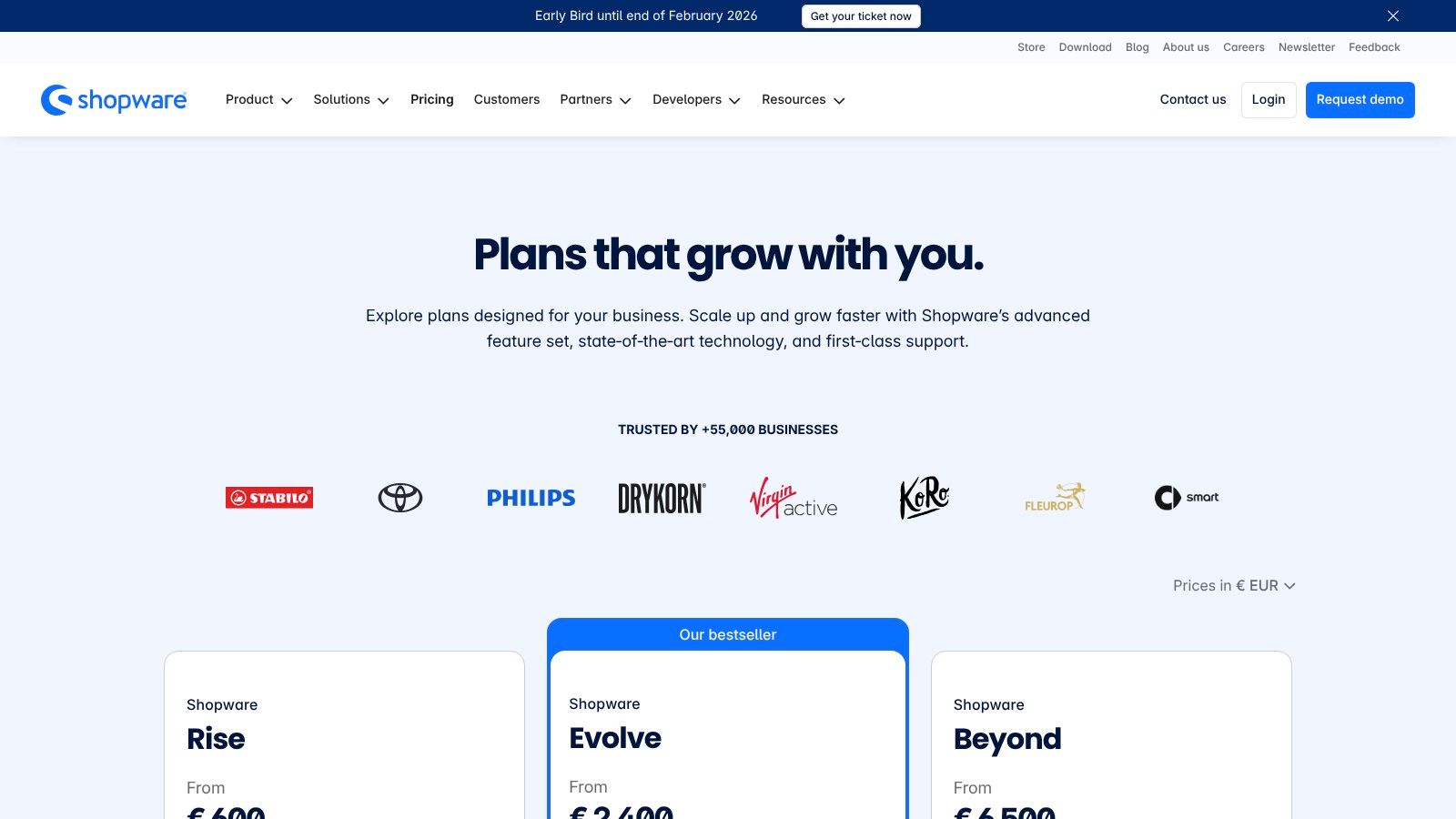
Shopware’s core system includes built-in controls for essential SEO elements like meta fields, canonical tags, and structured data, ensuring a solid technical foundation. Its "Shopping Experiences" feature allows for the creation of content-rich landing pages that are crucial for targeted SEO campaigns. The platform’s extensive marketplace offers numerous apps, including those for AI-powered metadata generation and advanced indexing control, allowing merchants to extend its native SEO functions significantly.
Key Strengths & Limitations
Pros:
- Marketer-Friendly SEO: The platform empowers marketers with intuitive tools to manage SEO settings, reducing the need for constant developer intervention.
- Flexible Architecture: Offers both hosted SaaS options for ease of use and a free, self-hosted Community Edition for complete customization and control.
- App Marketplace: Provides access to a growing ecosystem of plugins for advanced SEO, AI enhancements, and analytics integrations.
Cons:
- Regional Focus: While growing globally, its primary user base and support network are strongest in Europe. US merchants should verify hosting options and regional-specific support.
- Pricing in EUR: Official pricing is listed in euros, requiring US-based businesses to confirm current USD equivalent costs and payment terms.
Ultimately, Shopware is an excellent choice for mid-market and enterprise businesses that require a flexible, content-driven ecommerce solution with robust native SEO tools. Its dual offering of SaaS and self-hosted versions provides a clear growth path for ambitious brands.
Website: https://www.shopware.com/en/pricing
11. PrestaShop
PrestaShop is a feature-rich, open-source ecommerce platform that gives merchants granular control over their digital storefront. Its primary advantage lies in its modularity and customization potential, making it a strong candidate for the best ecommerce platform for SEO for those with technical proficiency or a development team. The free, self-hosted Classic edition provides a blank canvas, allowing for complete optimization of every aspect of the site, from server configuration to URL structures and advanced schema markup, without the inherent limitations of a hosted solution.

The platform's SEO capabilities are significantly expanded through its extensive marketplace of modules. Merchants can add specialized tools for tasks like advanced structured data, automated ALT tag generation, and comprehensive technical audits. For those who prefer a more managed environment, PrestaShop also offers a hosted option with pre-installed services and an enterprise tier that includes performance enhancements and specialized SEO features, providing a scalable pathway from a self-managed setup to a fully supported solution.
Key Strengths & Limitations
Pros:
- Highly Customizable: As an open-source platform, it offers unparalleled control over code, hosting environments, and technical SEO elements.
- Large Module Marketplace: An extensive selection of add-ons allows for the integration of powerful, specialized SEO tools to address specific needs.
- Flexible Deployment: Options range from a free, self-hosted version to fully managed hosted and enterprise solutions, catering to different technical and budget levels.
Cons:
- Technical Management: The self-hosted version requires significant technical expertise for setup, maintenance, security, and performance optimization.
- Cost of Modules: While the core software is free, many essential SEO and functionality modules are paid, which can substantially increase the total cost of ownership.
Ultimately, PrestaShop is best suited for merchants who demand complete control and are prepared to manage the technical complexities or invest in specialized modules and development resources to build a highly optimized online store.
Website: https://prestashop.com
12. G2
While not an ecommerce platform itself, G2 is an essential research marketplace for any business aiming to select the best ecommerce platform for SEO. It aggregates peer-to-peer software reviews, data-driven Grid rankings, and comprehensive feature comparisons, allowing decision-makers to evaluate vendors based on real-world user satisfaction and market presence. This makes it an invaluable strategic tool for shortlisting platforms that align with specific technical and on-page SEO requirements before committing to a provider.
The platform provides dedicated category pages where you can compare solutions side-by-side, filtering by market segment, user ratings, and specific features. By analyzing reviews from users with similar business models, you can gain insights into a platform’s practical SEO limitations, ease of use for marketing teams, and the effectiveness of its app ecosystem for extending SEO capabilities. It helps translate marketing claims into tangible user experiences.
Key Strengths & Limitations
Pros:
- Aggregated User Feedback: Provides authentic, third-party insights into how a platform performs in real-world scenarios, including its SEO strengths and weaknesses.
- Direct Comparisons: The Grid rankings and side-by-side comparison tools help accelerate the evaluation process by organizing key data points in one place.
- Free Access: All listings, reviews, and basic comparison reports are freely accessible, making it a cost-effective part of the research phase.
Cons:
- Subjective Reviews: User feedback can be subjective and sometimes inconsistent; it's crucial to cross-reference claims on the official vendor websites.
- Not a Vendor: G2 is a discovery tool, not a provider. It does not sell or host platforms, acting solely as a research aggregator.
Ultimately, using G2 enables a data-informed approach to platform selection, ensuring your choice is grounded in both vendor specifications and the collective experience of the user community.
Website: https://www.g2.com/categories/e-commerce-platforms
SEO Comparison of the Top 12 Ecommerce Platforms
| Platform | Core features ✨ | SEO & Performance ★ | Value & Pricing 💰 | Target audience & USP 👥🏆 |
|---|---|---|---|---|
| Shopify | Hosted CDN, Liquid themes, large app marketplace, integrated payments | Strong core SEO controls, fast checkout & stability ★★★★ | Tiered SaaS + paid apps; transaction fees on non‑Plus plans 💰 | Scalable merchants wanting performance & extensibility; 🏆app ecosystem |
| BigCommerce | Open‑SaaS, headless Catalyst, GraphQL API, multi‑store support | Native SEO & headless performance proven in case studies ★★★★ | No added transaction fees; plan caps may force upgrades 💰 | Brands needing headless/composable commerce; 🏆enterprise headless |
| WooCommerce | WordPress plugin, full ownership, huge plugin ecosystem | Maximum URL/metadata/schema control via plugins; hosting‑dependent ★★★★ | Free core + hosting & paid extensions (variable TCO) 💰 | Developers & stores requiring deep customization; 🏆flexibility & ownership |
| Wix eCommerce | Hosted builder, guided SEO setup, App Market | Guided SEO tools, instant indexing & redirects; beginner performance ★★★ | Easy, affordable tiers; limited advanced SEO flexibility 💰 | Non‑technical merchants wanting fast setup; 🏆ease of use |
| Squarespace | Design‑forward CMS, automatic SEO defaults, unified admin | Strong technical defaults, AI SEO suggestions; good for content sites ★★★ | All‑in‑one plans; fewer extensions than competitors 💰 | Content‑led commerce & creatives; 🏆clean design + simple SEO |
| Webflow Ecommerce | Visual CMS, programmatic content hubs, fine SEO controls | Excellent technical SEO without plugins; CMS for programmatic SEO ★★★★ | Ecommerce plans + platform transaction fees; SKU limits by tier 💰 | Designers & content teams building content‑heavy stores; 🏆programmatic SEO |
| Adobe Commerce (Magento) | API‑first, composable, powerful search & merchandising | Full technical SEO control; built for high Lighthouse/enterprise scores ★★★★★ | High TCO; custom pricing & deployment costs 💰 | Large/complex catalogs, B2B & enterprise; 🏆scalability & power |
| Shift4Shop (3dcart) | Hosted platform with built‑in SEO stack, AMP, schema, 301 handling | Many SEO features out‑of‑box; HTTPS & auto‑404 detect ★★★ | Free End‑to‑End for qualifying US merchants; fewer marketplace apps 💰 | US merchants wanting bundled SEO features; 🏆value-packed SEO |
| Square Online (Block) | Integrated with Square POS, per‑page SEO, sitemap & GSC | Basic SEO controls and auto‑sitemap; straightforward indexing ★★★ | Transparent US pricing & unified payments; simple tiers 💰 | Small omnichannel retailers & in‑person sellers; 🏆POS integration |
| Shopware | Composable platform, built‑in SEO, AI metadata tools, SaaS + Community | Marketer‑friendly SEO controls & AI enhancements ★★★★ | SaaS tiers + free Community Edition; EUR pricing to check for US buyers 💰 | Marketers & mid‑market merchants (EU focus); 🏆reduced dev dependency |
| PrestaShop | Open‑source Classic + hosted/enterprise options, module marketplace | Granular SEO via advanced modules; hosting affects performance ★★★★ | Free to download + many paid modules; self‑hosting costs 💰 | Tech‑savvy merchants wanting modular control; 🏆customizability |
| G2 | Review marketplace, Grid rankings, side‑by‑side comparisons | N/A as a platform — crowd‑sourced quality signals (subjective) ★★★ | Free research tool that accelerates vendor selection 💰 | Buyers evaluating platforms & teams; 🏆peer reviews & market insights |
Making a Strategic Choice for Long-Term Organic Growth
Choosing the best ecommerce platform for SEO is a foundational decision that will echo through your brand's digital presence for years. As we've explored, the answer isn't a one-size-fits-all declaration but a strategic alignment of technology with your specific business model, technical expertise, and long-term growth ambitions. This decision is less about crowning a single winner and more about identifying the right engine for your unique journey.
Platforms like Shopify offer unparalleled speed-to-market and a robust app ecosystem, making them ideal for startups and SMBs focused on immediate launch and operational simplicity. Conversely, solutions like WooCommerce and Adobe Commerce provide near-infinite customization and control, catering to businesses with dedicated development resources and complex, large-scale catalogs that demand granular SEO management. BigCommerce strikes a compelling balance, delivering powerful, built-in SEO features that can support a business from its initial launch through to enterprise-level scaling without requiring a complete replatforming.
Key Takeaways: From Platform Features to Strategic Implementation
Ultimately, the platform is the vehicle, not the driver. Your organic growth depends on the strategy you execute. To distill the detailed analysis of each platform, remember these core principles:
- Technical Foundation is Non-Negotiable: Prioritize platforms that provide clean, indexable code, control over URLs, canonical tags, and robots.txt. A solid technical base prevents you from fighting against the platform's limitations from day one.
- Content and SEO are Inseparable: Your chosen platform must support a robust content strategy. This means having an integrated, SEO-friendly blogging system, the ability to create custom landing pages, and the flexibility to optimize on-page elements like titles, meta descriptions, and image alt text.
- Scalability Matters: The right choice today must also be the right choice in three to five years. Consider how the platform will handle an expanding product catalog, increased traffic, and the potential need for more advanced features like international SEO (hreflang), faceted navigation management, and structured data implementation.
Your Actionable Next Steps
Armed with this information, your path forward should be methodical and data-driven. Don't let paralysis by analysis hinder progress. Instead, focus on a structured evaluation process.
- Audit Your Current Needs and Future Goals: Document your current product count, anticipated traffic growth, and the technical skills available on your team. What are your non-negotiable SEO features right now? What will they be in two years?
- Shortlist 2-3 Contenders: Based on our detailed breakdowns, select the top platforms that align with your business profile. If you're a content-heavy brand needing flexibility, WooCommerce and Webflow might be your top contenders. If you need a powerful, all-in-one solution, BigCommerce is likely on your list.
- Schedule Demos and Trials: Engage with the platforms. Test their user interfaces, explore their app marketplaces, and ask their sales teams specific, pointed questions about SEO functionalities like XML sitemap control, redirect management, and Core Web Vitals performance.
This decision is a significant investment in your brand's future visibility and organic revenue potential. For an even more granular breakdown to aid your final selection, a detailed ecommerce platform comparison can provide the clarity needed to make a confident, strategic choice. The perfect platform empowers your SEO strategy; it doesn't dictate it. By selecting a foundation that aligns with your goals, you are setting the stage not just for better rankings, but for sustainable, long-term organic growth.
Choosing the right ecommerce platform is a critical first step, but sustainable growth is driven by the strategic execution that follows. A powerful platform is only as effective as the expertise guiding its SEO, content, and analytics. At Data Hunters Agency, we focus on building data-driven strategies that turn your platform’s potential into measurable organic revenue. Contact us to discuss how a strategic approach can build your brand's authority and market share.