
Understanding your competitive landscape is a foundational element of any successful growth strategy. Without a clear view of what your rivals are doing, you are essentially operating in the dark, missing critical opportunities to capture market share, refine your value proposition, and anticipate industry shifts. The right intelligence can reveal their SEO strategies, pinpoint their most profitable ad campaigns, expose content gaps you can fill, and highlight the technologies powering their success.
Choosing the best tools for competitor analysis is not about finding a single magic bullet. It's about building a strategic toolkit that provides a multi-faceted view of your market. Different platforms excel in specific areas, from backlink analysis and keyword research to social media monitoring and website traffic estimation. For businesses seeking to make data-driven decisions, this intelligence is non-negotiable. Before selecting specific platforms, it’s wise to have a solid framework in place. Following a structured guide on how to conduct a competitor analysis ensures you ask the right questions and extract maximum value from the tools you deploy.
This comprehensive guide moves beyond generic feature lists to provide an actionable breakdown of the top competitor analysis platforms available today. We will dissect each tool's core strengths, ideal use cases for SMBs and local businesses, and practical limitations. Each entry includes direct links and screenshots to help you evaluate which solutions best fit your specific operational needs and strategic objectives, enabling you to build a powerful, customized intelligence stack.
1. Semrush
Semrush stands as an industry-defining, all-in-one digital marketing suite, earning its top spot for its sheer breadth and depth of competitive intelligence features. It’s far more than a simple SEO tool; it’s a comprehensive platform for deconstructing your rivals' entire digital strategy, making it one of the best tools for competitor analysis available to businesses of any size. From keyword and backlink gap analysis to paid ad monitoring and traffic analytics, Semrush provides a 360-degree view of the competitive landscape.
The platform excels at turning raw data into actionable insights. Its Domain vs. Domain feature allows you to directly compare your site against up to four competitors, instantly revealing keyword opportunities you’re missing. The Market Explorer and Traffic Analytics tools go further, estimating your competitors’ website traffic, audience demographics, and primary acquisition channels, which is invaluable for strategic planning.
Key Features & Use Case
- Keyword Gap Analysis: Identify high-value keywords your competitors rank for, but you don't. This is a direct path to capturing qualified traffic.
- Backlink Gap: Discover authoritative domains linking to your rivals but not to you, providing a ready-made list of high-priority outreach targets.
- Advertising Research: Analyze your competitors' PPC ad copy, spend, and keyword targets to refine your own paid campaigns and avoid costly mistakes.
Implementation & Pricing
Semrush operates on a tiered subscription model, starting with the Pro plan at approximately $129.95/month, scaling up to Business plans with more advanced features and API access. While the investment is significant, its comprehensive nature often replaces the need for multiple disparate tools. The interface can be complex for new users, so plan for a learning curve. Start by focusing on one key area, like the Keyword Gap tool, to secure early wins before exploring the full suite.
Website: https://www.semrush.com
2. Ahrefs
Ahrefs has earned its reputation as a powerhouse in competitive analysis, primarily due to its industry-leading backlink index and robust SEO data. While Semrush offers an all-in-one suite, Ahrefs provides unparalleled depth in link-based intelligence and content research. It's one of the best tools for competitor analysis for businesses focused on building authority through high-quality backlinks and superior content, offering a granular view of what drives a rival's organic success.
The platform's Site Explorer is its core competitive analysis tool, allowing you to dissect any URL to uncover its top organic keywords, backlink profile, and highest-traffic pages. Its Content Gap feature is exceptionally powerful, pinpointing keywords that multiple competitors rank for but you don't. This moves beyond a simple one-to-one comparison, revealing broader market-level content opportunities. The user interface is clean and intuitive, making complex data sets accessible even to less experienced users.
Key Features & Use Case
- Top Pages & Competing Domains: Instantly find your competitors' most valuable content assets and identify overlapping rivals you may have overlooked.
- Backlink Profile Analysis: Go beyond simple link counting to see new, lost, and broken backlinks, providing actionable data for link-building campaigns.
- Content Gap Tool: Discover keyword and content gaps by comparing your domain against several competitors at once, creating a data-backed content strategy.
Implementation & Pricing
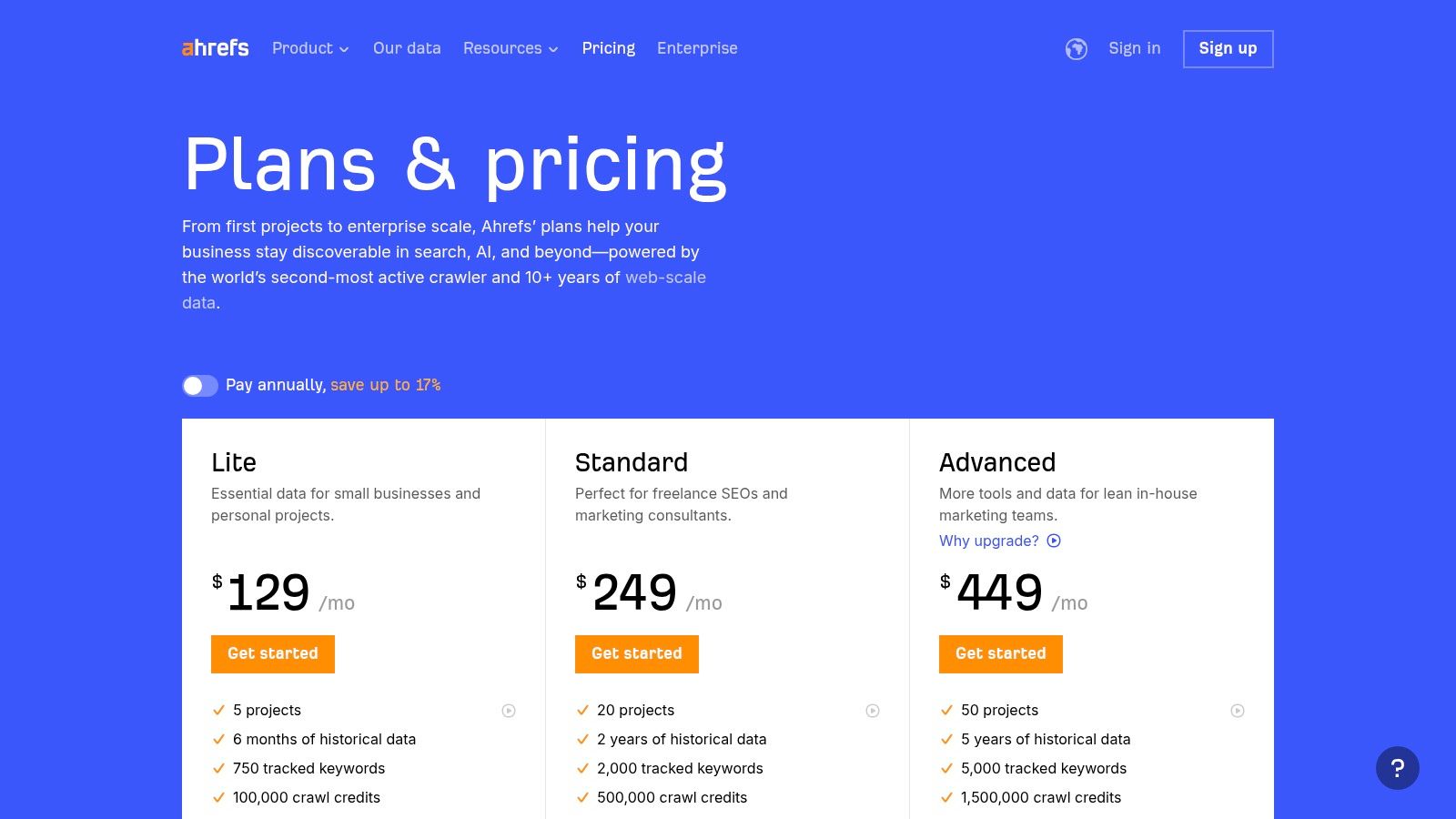
Ahrefs offers several subscription tiers, starting with the Lite plan at $99/month, and scaling to advanced Enterprise plans. A key consideration is its credit-based system and user seat limits, which can increase costs for larger teams or agencies running extensive reports. While not the cheapest option, its superior link index and content analysis features provide a distinct advantage. For implementation, start with the Site Explorer to analyze your top three competitors and export their Top Pages report to find immediate content ideas.
Website: https://ahrefs.com/pricing
3. Similarweb
Similarweb has carved out a distinct niche as a premier digital market intelligence platform, focusing on high-level traffic and engagement metrics. While other tools often start with SEO, Similarweb begins with the bigger picture: website traffic, audience behavior, and acquisition channels. This makes it an indispensable tool for benchmarking your market share and understanding the digital footprint of your competitors from a bird's-eye view, solidifying its place among the best tools for competitor analysis.
For understanding your rivals' online presence, Similarweb excels at revealing traffic data, providing crucial insights into how to track visits to a website. The platform's strength lies in its ability to estimate and break down a competitor's traffic sources, clearly showing the split between direct, referral, search, social, and paid channels. This is invaluable for identifying a competitor’s primary growth drivers and uncovering new opportunities for your own strategy.
Key Features & Use Case
- Traffic & Engagement Analysis: Instantly benchmark your website's total visits, bounce rate, and time on site against key competitors to gauge market position.
- Marketing Channel Breakdown: Discover the percentage of traffic competitors get from SEO, PPC, social media, and referrals to identify their most effective acquisition strategies.
- Audience Demographics & Interests: Gain insights into your competitors' audience geography and interests to better tailor your marketing campaigns and content.
Implementation & Pricing
Similarweb offers a range of self-serve packages, with pricing often customized based on the modules included, such as Competitive Intelligence, SEO, and Advertising. While a free version provides limited data, paid plans are necessary for deep analysis and historical data access. The platform is relatively intuitive, allowing users to quickly pull high-level reports. For a small business, starting with the core competitive intelligence module provides actionable data for strategic planning without the complexity of an all-in-one suite.
Website: https://www.similarweb.com/packages
4. SpyFu
SpyFu carves out a powerful niche by focusing intensely on PPC and keyword competitor intelligence, delivering a treasure trove of historical advertising data at an exceptionally accessible price point. While larger suites offer broader functionality, SpyFu excels as one of the best tools for competitor analysis specifically for businesses wanting to quickly deconstruct and counter rival paid search strategies. It provides years of data on every keyword a competitor has ever bought on Google and every ad test they've ever run, making it a go-to for tactical PPC research.
The platform's strength lies in its simplicity and directness. Its PPC Research feature instantly reveals a competitor’s ad spend history, most profitable keywords, and even their ad copy variations over time. This historical perspective is invaluable for identifying seasonal trends and understanding which ad concepts have consistently performed for rivals. For SEO, its Kombat feature provides a classic Venn diagram view of keyword overlaps, quickly highlighting opportunities where competitors rank and you don’t.
Key Features & Use Case
- Competitor Ad History: Download a complete history of a competitor's Google Ads campaigns, including ad copy and keyword targets. Use this to bypass costly A/B testing by learning from their successes and failures.
- PPC Keyword Research: See the exact keywords competitors are bidding on, how much they spend, and how many clicks they get. This is a direct route to building a profitable paid campaign from day one.
- SEO Research: Uncover a competitor's organic keyword rankings and inbound links to inform your content strategy and identify backlink opportunities without a significant investment.
Implementation & Pricing
SpyFu’s major advantage is its value-driven pricing, with a Basic plan starting around $39/month. Unlike many tools, even its entry-level plans offer unlimited search results and data exports, making it highly practical for agencies or in-house teams running extensive research. The interface is more utilitarian than polished, but it's straightforward and gets the job done efficiently. While its data depth may not match premium suites, SpyFu is an essential, cost-effective tool for any team heavily invested in outmaneuvering competitors on Google Ads.
Website: https://www.spyfu.com
5. Moz Pro
Moz Pro secures its spot as one of the best tools for competitor analysis by making sophisticated SEO data accessible and actionable, especially for SMBs and those newer to digital marketing. It is renowned for its user-friendly interface and industry-standard metrics like Domain Authority (DA), which provides a quick, comparative measure of a competitor's website strength. While it offers a comprehensive suite of tools, its core strength lies in its approachable design and excellent educational resources, which help demystify complex SEO concepts.
The platform excels at providing clear, high-level snapshots of the competitive landscape. Its Campaign feature allows you to track your site alongside key competitors, monitoring rank changes and on-page optimization opportunities in one cohesive dashboard. For businesses looking to understand their position without getting lost in excessive data, Moz Pro offers a balanced and guided experience, focusing on the metrics that drive meaningful organic growth.
Key Features & Use Case
- Keyword Gap: Use the “Ranking Keywords” report under the Competitive Research section to compare your domain with a competitor and filter for keywords they rank for but you don't.
- Link Explorer: Analyze a competitor’s backlink profile to find their most authoritative referring domains. The “Link Intersect” tool reveals sites linking to multiple competitors but not to you.
- Rank Tracking: Set up campaigns to monitor your keyword performance against your rivals in specific geographic locations, crucial for local businesses.
Implementation & Pricing
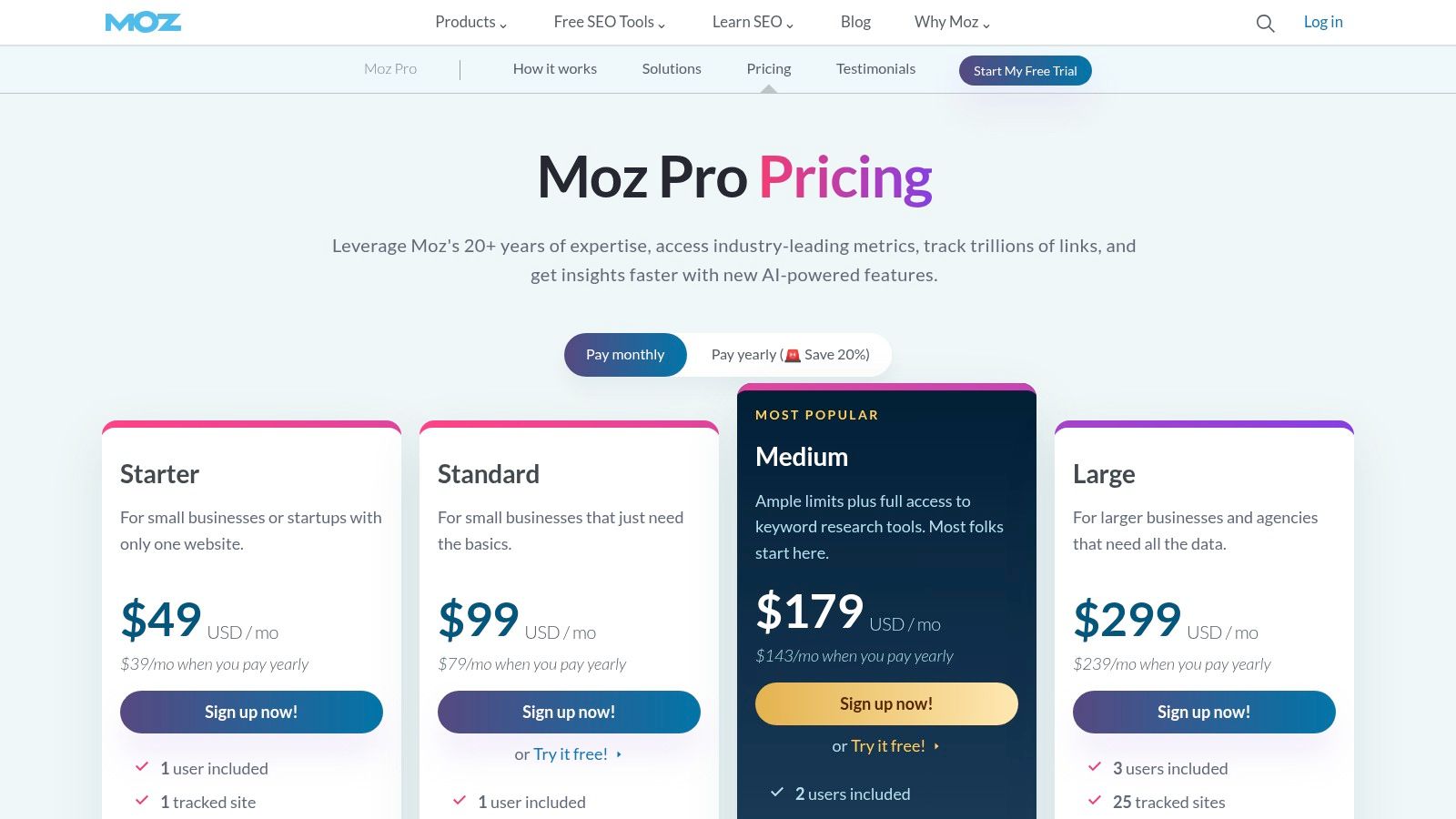
Moz Pro's pricing begins with the Standard plan at around $99/month ($79/month if paid annually), scaling up to Premium for larger agencies and enterprises. The clear quotas and straightforward plan structure make it easy to choose the right tier. While its backlink index may be smaller than some competitors, its strength in usability makes it an ideal starting point. New users should begin by setting up a campaign to track a few core competitors, using the weekly reports to guide their initial SEO strategy.
Website: https://moz.com/products/pro/pricing
6. BuzzSumo
While many tools focus on technical SEO metrics, BuzzSumo carves out a niche as an indispensable platform for content and public relations intelligence. It excels at answering one critical question: what content resonates most with your target audience and why? By analyzing billions of articles and social media posts, BuzzSumo provides a clear view of your competitors' most successful content, making it one of the best tools for competitor analysis for any brand driven by content marketing.
The platform allows you to uncover top-performing content by topic or by a specific competitor's domain. You can see which articles earned the most social shares, backlinks, and overall engagement across different platforms. This insight is crucial for deconstructing a rival’s content strategy, identifying content gaps in the market, and generating data-backed ideas for your own editorial calendar. Its journalist and influencer discovery features also provide a direct path to amplifying your message.
Key Features & Use Case
- Content Analyzer: Enter a competitor’s domain to see their most shared and linked-to articles from the past year. Use this to reverse-engineer their content pillars and identify formats that attract authority links.
- Trending Feeds: Monitor real-time trending topics in your industry to create timely, relevant content that piggybacks on current conversations before your competitors do.
- Mention Alerts: Set up alerts to be notified whenever a competitor is mentioned online or publishes new content, allowing you to react quickly with your own strategic responses or outreach.
Implementation & Pricing
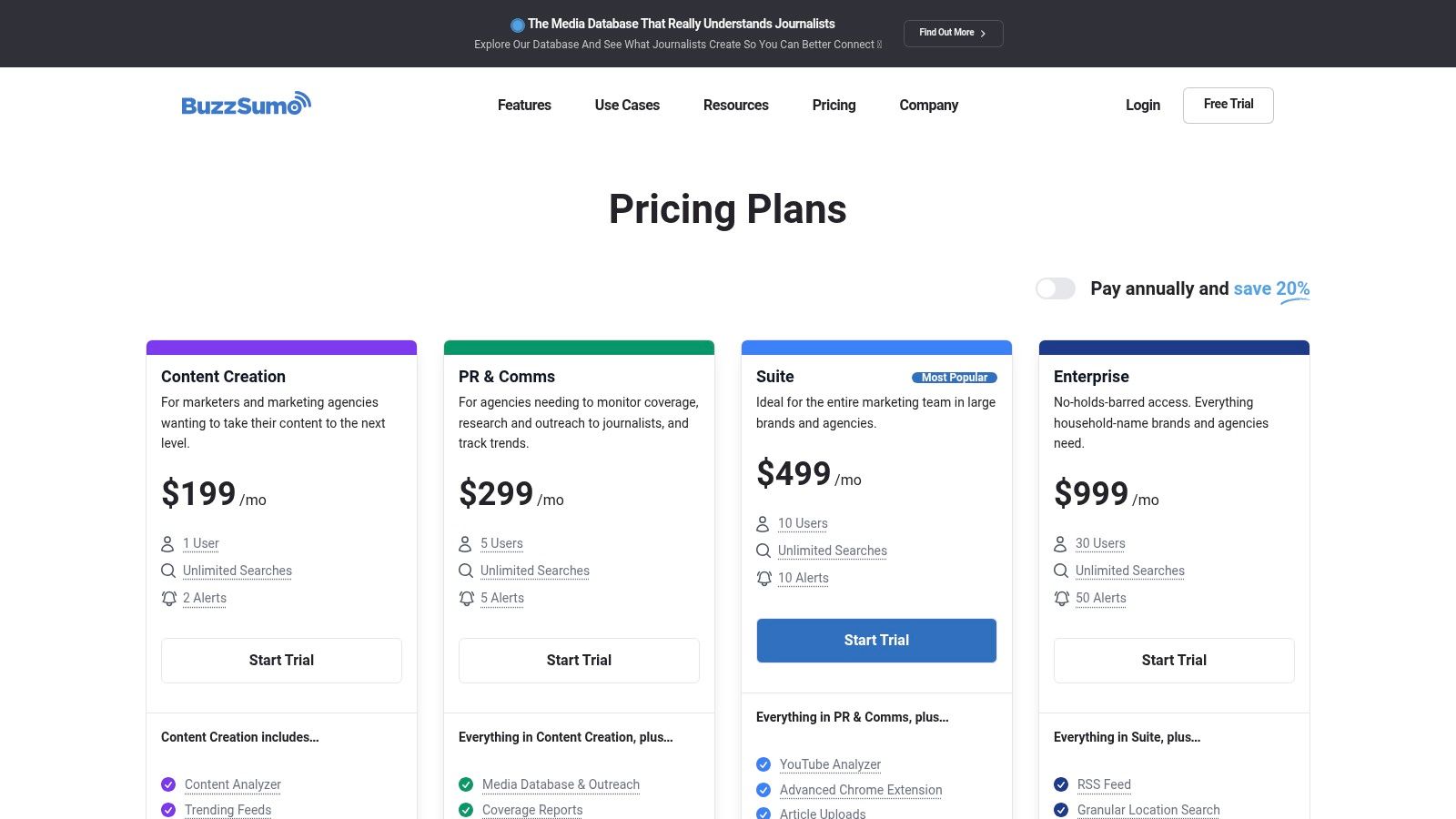
BuzzSumo offers several pricing tiers, starting with a limited free plan and paid plans beginning around $199/month. Higher-tier plans unlock more alerts, greater data access, and PR-specific features like journalist databases. The interface is highly intuitive, making it easy to get started. A practical first step is to run a content analysis on your top three competitors to benchmark their performance and identify immediate "low-hanging fruit" topics for your own content plan.
Website: https://buzzsumo.com/pricing/
7. BuiltWith
BuiltWith offers a unique and powerful angle on competitive intelligence by focusing on technographics, revealing the underlying technology stack of any website. It goes beyond keywords and backlinks to show you precisely what software, widgets, and analytics tools your competitors use to run their business. This makes it one of the best tools for competitor analysis when your goal is to understand a rival’s operational infrastructure, from their e-commerce platform and CRM to their advertising and retargeting pixels.
This level of insight is invaluable for market sizing, sales prospecting, and strategic planning. By identifying which technologies are prevalent in your market, you can understand industry standards, spot adoption trends, and even build targeted lead lists based on the software a company uses. It transforms competitor analysis from a marketing-only exercise into a comprehensive business intelligence function.
Key Features & Use Case
- Technology Lookup: Instantly see the full technology profile of a competitor’s site, including analytics, advertising networks, CMS, and payment gateways.
- Lead Generation & Market Share: Generate lists of websites using a specific technology (e.g., all sites using Shopify Plus and Klaviyo) for highly targeted B2B prospecting.
- Technology Trends: Analyze historical data to see which technologies are gaining or losing market share within your industry, informing your own tech stack decisions.
Implementation & Pricing
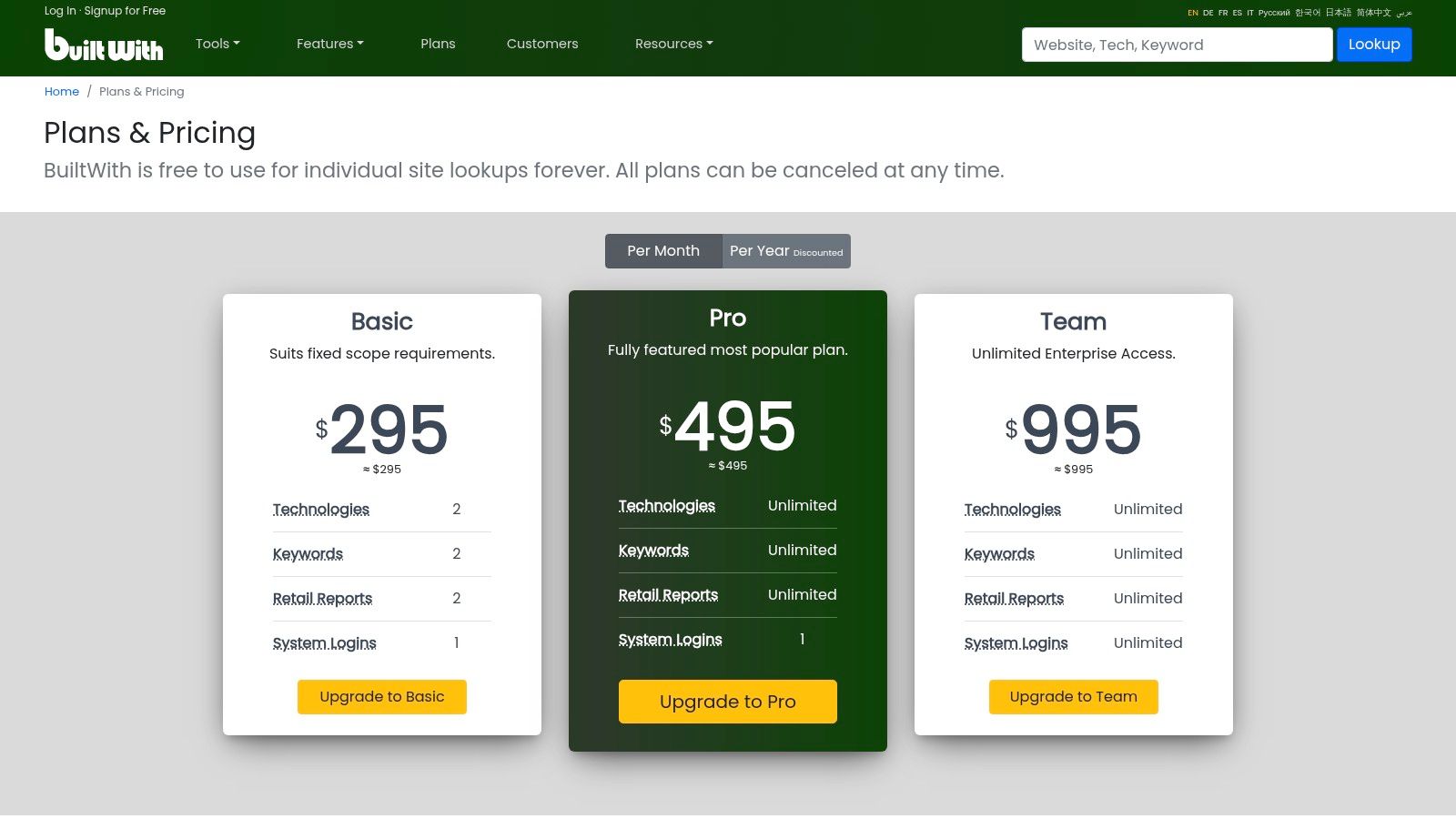
BuiltWith offers a limited free lookup for individual sites. Paid plans, which unlock its powerful list-building and reporting features, start at $295/month for the Basic plan, scaling to $495/month for Pro and $995/month for Team. The interface is data-rich and utilitarian rather than visually polished, focusing purely on function. For B2B companies or agencies, the best approach is to start with a clear objective, such as building a list of prospects using a complementary or rival technology, to justify the investment and achieve a direct ROI.
Website: https://builtwith.com/plans
8. Wappalyzer
Wappalyzer offers a unique angle on competitive intelligence by focusing on the technology stack that powers your competitors' websites. It moves beyond traffic and keywords to reveal the specific software, frameworks, and plugins a rival uses, from their CMS and e-commerce platform to their analytics and CRM tools. This insight is a goldmine for sales, business development, and product marketing teams looking to understand a competitor’s operational capabilities and identify prospects based on their current technology.
This platform is one of the best tools for competitor analysis when your goal is to qualify leads or understand a market from a technical standpoint. By identifying which companies use a specific technology (e.g., Shopify), you can tailor sales pitches and marketing campaigns with surgical precision. The tool’s ability to provide alerts when a competitor adds or removes a technology also offers a critical, timely window into their strategic shifts, such as an investment in a new marketing automation platform.
Key Features & Use Case
- Technology Lookup: Instantly identify the entire technology stack of any website. This is ideal for SaaS companies looking for integration opportunities or businesses assessing a competitor's technical sophistication.
- Lead Lists & Enrichment: Generate targeted lead lists based on the technologies a company uses. For example, an agency specializing in HubSpot migrations can find all websites using a competing CRM.
- Competitor Alerts: Receive real-time notifications when a tracked competitor adopts new software, signaling a change in strategy or a potential pain point you can solve.
Implementation & Pricing
Wappalyzer uses a credit-based system and offers several tiers, including a free plan for basic browser-extension lookups. Paid plans start at $250/month (billed annually), providing credits for lookups, lead list creation, and API access. The credit system requires careful planning to match your usage needs, as high-volume lookups or extensive lead generation can deplete credits quickly. For effective implementation, integrate the API with your CRM to automatically enrich new leads with technology stack data, empowering your sales team with valuable context before the first outreach.
Website: https://www.wappalyzer.com/pricing/
9. Owler
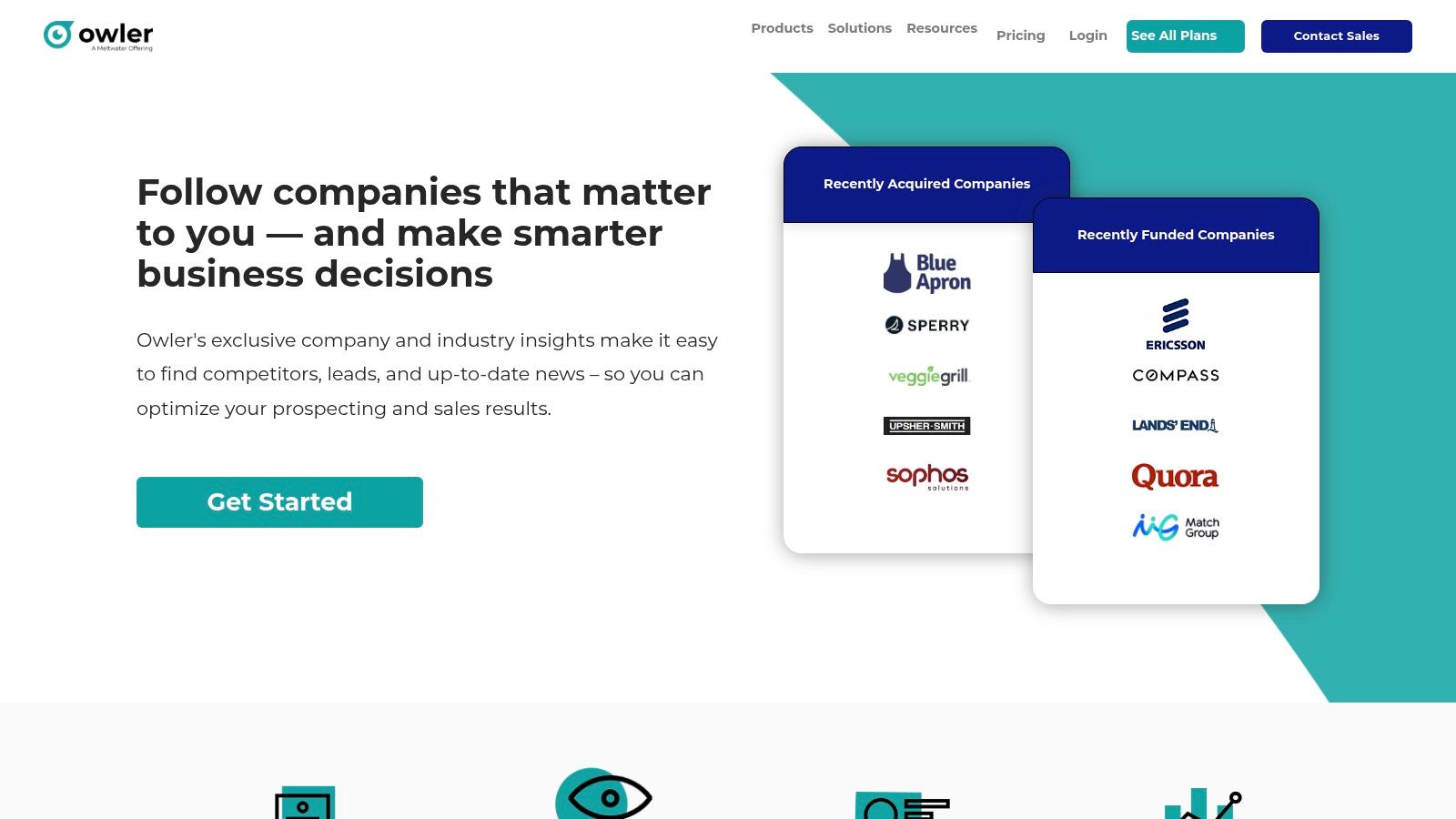
While many tools focus on digital marketing metrics, Owler carves out a unique niche by delivering competitive intelligence on a corporate level. It tracks companies, not just websites, providing real-time news alerts, funding rounds, acquisition announcements, and leadership changes. This makes it one of the best tools for competitor analysis when your goal is to understand a rival's business health, strategic direction, and market positioning beyond their SEO or ad campaigns.
Owler excels at mapping the competitive ecosystem. For any given company, it generates a list of its top competitors, creating a visual web of industry relationships. This is invaluable for identifying both direct and indirect rivals you may have overlooked, offering a broader perspective on market dynamics and potential threats.
Key Features & Use Case
- Competitor Relationship Mapping: Instantly see a company’s primary competitors, providing a quick-start list for deeper digital analysis in other tools.
- Real-Time News Alerts: Get notified about a competitor's press releases, funding, or acquisitions to anticipate their next strategic move or marketing push.
- Company Profiles & Data: Access high-level firmographic data like employee count, estimated revenue, and key executives, useful for sales and partnership prospecting.
Implementation & Pricing
Owler offers a free plan with limited access and a paid Pro plan starting at $420/year per seat, with more advanced features like unlimited saved lists and CRM integrations available on custom Enterprise tiers. The pricing for higher tiers is opaque and requires contacting sales. Its strength is in its large database of private companies, offering insights where public data is scarce. Start by tracking your top 5-10 competitors on the free plan to gauge the value of the alerts before committing to a paid subscription.
Website: https://www.owler.com
10. Crayon
Crayon moves beyond typical SEO and marketing metrics to offer a dedicated, enterprise-grade competitive intelligence (CI) platform. While other tools focus on web traffic and keywords, Crayon specializes in capturing and organizing qualitative and quantitative competitor signals from across the digital ecosystem. It automatically tracks everything from website changes and pricing updates to customer reviews and new content, centralizing this intel for cross-functional teams like sales, marketing, and product development.
The platform is purpose-built to operationalize competitive intelligence, making it one of the best tools for competitor analysis in a corporate setting. Its core strength lies in translating raw data into actionable assets. Crayon’s workflow enables teams to curate the most critical updates and package them into Battlecards, which equip sales teams with timely talking points and objection-handling strategies. This direct line from market signal to sales enablement is what sets it apart from more marketing-centric tools.
Key Features & Use Case
- Automated Signal Capture: Track over 100 data types across your competitors' digital footprints to ensure you never miss a critical product launch, pricing shift, or messaging change.
- Battlecard Creation & Distribution: Build, share, and track the usage of dynamic sales battlecards directly within the platform, integrating with tools like Salesforce and Slack for seamless access.
- Stakeholder Workflows: Curate and deliver tailored intelligence digests to different departments, ensuring that marketing, product, and leadership teams receive only the most relevant insights.
Implementation & Pricing
Crayon’s pricing is available only through its sales team and is typically structured as an annual enterprise contract. This model often includes unlimited users, making it scalable for large organizations. The platform is not a self-serve tool; implementation requires a structured onboarding process to connect data sources and configure workflows. For companies ready to invest in a dedicated CI function, Crayon provides the infrastructure to centralize intelligence and drive strategic, company-wide alignment based on market movements.
Website: https://www.crayon.co/
11. Brandwatch
Brandwatch moves beyond traditional SEO metrics to offer deep social listening and consumer intelligence, making it an indispensable tool for understanding competitor brand perception. It excels at capturing the public conversation, analyzing share-of-voice, sentiment, and trending topics across billions of online sources. This allows you to monitor not just what competitors are doing, but how their actions are perceived by the market in real-time.
This platform is one of the best tools for competitor analysis when your goal is to gauge brand health and campaign impact. By setting up queries to track rivals, you can benchmark your social presence against theirs, identify key influencers they engage with, and preemptively spot emerging industry trends or potential PR crises. It transforms unstructured social chatter into a structured competitive dataset.
Key Features & Use Case
- Competitive Benchmarking: Track and compare key metrics like share of voice, sentiment, and reach against your main competitors to measure brand positioning.
- Real-time Listening & Trend Discovery: Monitor brand mentions and industry keywords as they happen, allowing you to react quickly to competitor campaigns or shifts in consumer behavior.
- Influencer Identification: Analyze which influencers and creators are driving conversations for your competitors, revealing potential partnership opportunities for your own brand.
Implementation & Pricing
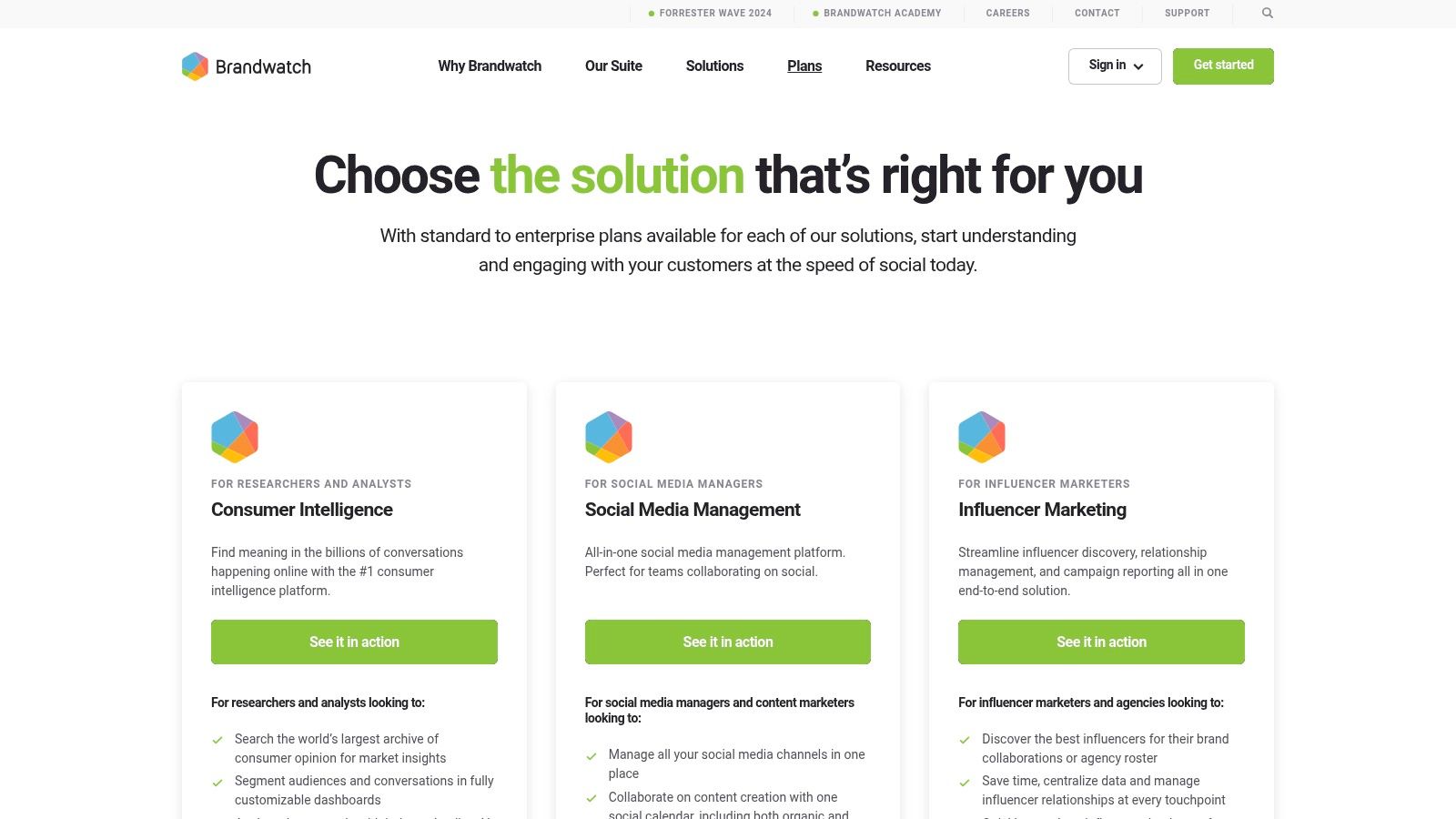
Brandwatch is an enterprise-level solution with custom pricing available through a sales-led process; there are no public pricing tiers. Contracts are typically annual, and setup often involves direct engagement with their team for onboarding and query configuration. Given its focus on deep data and comprehensive workflows, it is best suited for larger teams with a dedicated social media or market research function.
Website: https://www.brandwatch.com/pricing/
12. Sensor Tower
For businesses operating in the mobile-first economy, Sensor Tower is the gold standard for competitive intelligence. While many tools focus on web traffic, Sensor Tower provides an unparalleled, data-rich view into the mobile app ecosystem. It offers deep insights into competitor app performance, including download estimates, revenue generation, and user engagement metrics across both the App Store and Google Play, making it one of the best tools for competitor analysis in the mobile space.
The platform moves beyond basic app store rankings to deliver actionable intelligence. Its Ad Intelligence feature, for instance, allows you to uncover your competitors' mobile advertising strategies, see their top-performing ad creatives, and analyze their share-of-voice across major networks. This level of detail is critical for any company whose primary customer touchpoint is a mobile application, enabling you to benchmark performance and identify market opportunities with precision.
Key Features & Use Case
- App & Store Intelligence: Get accurate download and revenue estimates to benchmark your app's market share against key competitors.
- Ad Intelligence: Deconstruct rivals' mobile ad campaigns by analyzing their creatives, spend, and network distribution to inform your user acquisition strategy.
- Usage Intelligence: Analyze active users, session data, and retention rates to understand how audiences engage with competing apps post-install.
Implementation & Pricing
Sensor Tower operates on an enterprise-level, contract-based pricing model. Access is not available through a self-serve portal; interested parties must request a demo to engage with their sales team and receive a custom quote. This positions the tool primarily for established mobile businesses, game developers, and enterprise clients who require highly accurate, granular app market data. For smaller teams, the high barrier to entry and cost will be a significant consideration.
Website: https://sensortower.com/demo
How to Choose the Right Competitor Analysis Tool
With a diverse landscape of platforms, selecting the right one requires a strategic approach. The best tool for a B2B SaaS company will differ from that of a local e-commerce store. Use this framework to guide your decision-making process:
-
Define Your Primary Goal: What specific question are you trying to answer?
- SEO & Content: If your goal is to outperform competitors in search rankings and content marketing, prioritize all-in-one SEO suites like Semrush or Ahrefs.
- PPC & Advertising: To deconstruct paid ad strategies and optimize your spend, a specialized tool like SpyFu offers unparalleled historical data and direct ROI.
- Market Positioning & Traffic: For high-level benchmarking of market share and traffic channels, Similarweb provides the clearest bird's-eye view.
- Sales & Lead Generation: If your objective is to find prospects based on their technology stack, BuiltWith or Wappalyzer are your go-to solutions.
- Brand & Social Strategy: To understand public perception and social media impact, Brandwatch delivers critical consumer intelligence.
-
Assess Your Team's Capacity: A powerful tool is useless without the resources to implement its insights. Be realistic about your team's expertise and available time. Platforms like Moz Pro are known for their user-friendly interfaces and educational resources, making them ideal for smaller teams or those new to SEO. Enterprise solutions like Crayon or Brandwatch require dedicated personnel to manage and operationalize the intelligence they gather.
-
Consider Your Budget and Scalability: Your investment should align with the potential return. For startups and SMBs, cost-effective tools like SpyFu deliver high-impact data without a significant financial commitment. As your business grows, you can graduate to more comprehensive suites. Always factor in hidden costs like extra user seats, API access, or credit-based reporting, which are common in platforms like Ahrefs and Semrush.
Ultimately, the goal is not to find a single platform that does everything, but to build a small, synergistic toolkit that addresses your most critical intelligence needs.
Final Thoughts: From Data to Dominance
Navigating the competitive landscape without the right intelligence is like sailing a ship without a compass. The platforms explored here—from all-in-one SEO suites like Semrush and Ahrefs to specialized solutions like Brandwatch and Sensor Tower—provide the necessary instrumentation to chart a course toward market leadership. Each tool offers a unique lens through which to view your rivals' strategies, revealing the data you need to make smarter, faster, and more profitable decisions.
An effective competitive analysis strategy is not about finding one perfect platform but about building a strategic, multi-faceted "tech stack" that aligns with your specific business goals. An e-commerce brand might combine Similarweb for traffic insights, SpyFu for PPC ad copy analysis, and BuzzSumo for content strategy. A local service business, however, may find that Moz Pro's local SEO features, combined with Wappalyzer to understand a competitor's web tech, provides the most actionable intelligence.
The true value of these platforms lies not in the data they collect but in the strategic actions you take based on that data. The goal is to transform this raw information into a competitive advantage. Remember to start with a clear objective, establish a baseline of your own performance, and create a repeatable process for ongoing analysis.
By choosing your toolkit wisely and committing to a data-driven approach, you move from passive observation to active strategy. You equip your business with the insight needed to not just compete, but to lead.
At Data Hunters Agency, we transform competitive data into decisive action. While these tools provide the raw intelligence, our expertise lies in synthesizing that information into a cohesive SEO and growth strategy that drives measurable results. If you're ready to move beyond reports and start outmaneuvering your competition, see how our data-driven approach can build your market authority at Data Hunters Agency.